NY LOFTAn independent guide to five Brooklyn neighbourhoods and the things built in them.

SUNSET PARK

A private port with its own railway

Bush Terminal was an industrial waterfront city — piers, warehouses and rail — and its remains still shape the shoreline.

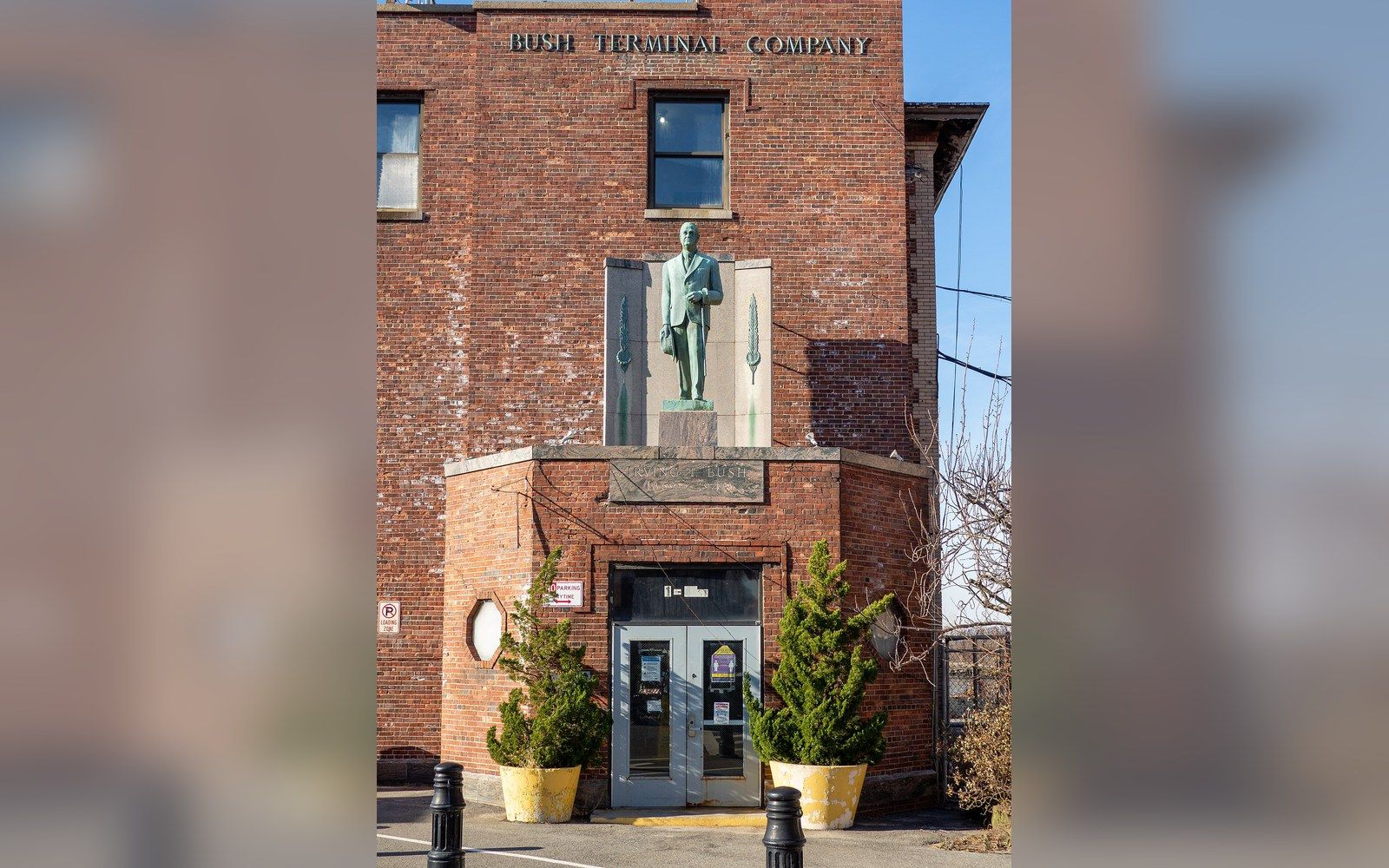
The Bush Terminal Company building with a bronze statue above its doorway
Irving T. Bush stands over his own front door on First Avenue.Bush Terminal Company · Wikimedia Commons

Bush Terminal turned thirty blocks of Sunset Park waterfront into a self-contained industrial city — one man's idea of how freight, manufacturing and shipping ought to work together.

The invention of Bush Terminal

Irving T. Bush was twenty-six years old when he inherited a losing oil depot on the waterfront south of 28th Street and decided to rebuild the logic of the whole operation. The year was 1895. Within a decade he had transformed roughly a mile of Brooklyn shoreline into something that had no precise model anywhere in the United States: a vertically integrated port complex with its own internal railway, its own loft buildings for light manufacturing, its own piers equipped to handle ocean-going vessels, and its own steam-powered utilities shared across every tenant.

The idea was simple and the execution was formidable. Small manufacturers in Manhattan paid for freight to reach the waterfront, then paid again to have it loaded. Bush eliminated the intermediate step. A factory tenant in one of his eleven-story brick loft buildings could receive raw materials by rail at the loading dock, manufacture the finished goods on the upper floors, and have them moved by the terminal's own locomotives to a pier and put directly aboard a ship — all without leaving the complex. The internal rail network connected to the national freight system via car-float barges that crossed the harbor from New Jersey, bypassing the congestion of Manhattan entirely.
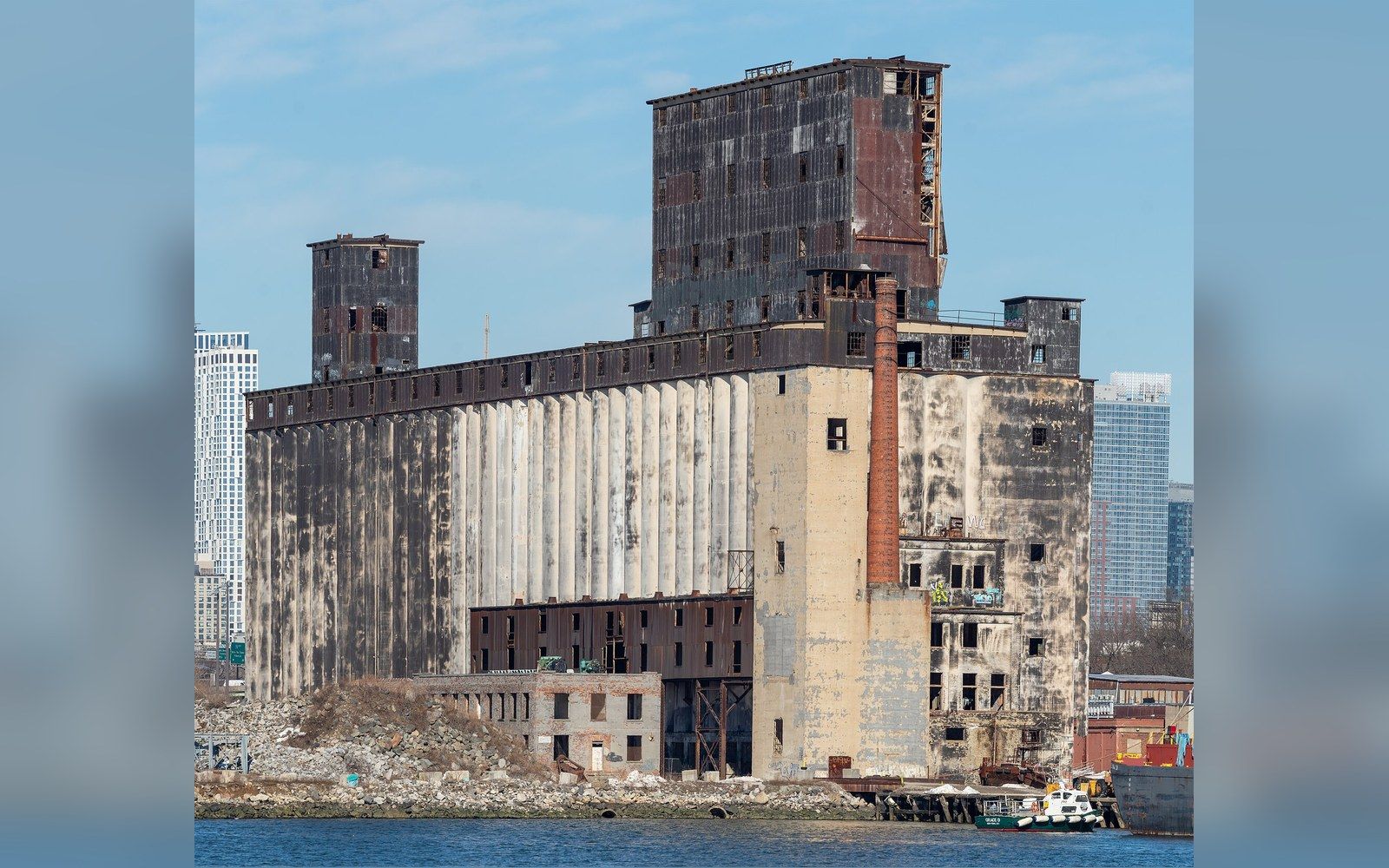
A vast concrete grain elevator on a derelict waterfront
Further along the same shoreline: concrete built for a canal trade that had already gone.Red Hook grain terminal · Wikimedia Commons

By the early twentieth century, Bush Terminal ↗ covered a long stretch of waterfront, with several piers and several million square feet of manufacturing and warehouse space. During the First World War, the US Army quartermaster corps used it as a primary supply depot, moving enormous volumes of materiel through the complex. The Second World War brought a second period of that scale. The piers handled military cargo; the loft buildings ran shifts around the clock.

What the waterfront became

The terminal's postwar decline followed the same arc as most American industrial waterfronts. Containerization, which required flat land in quantities Bush Terminal could not provide, moved cargo to Port Newark and Port Elizabeth in New Jersey through the 1960s. The manufacturing tenants thinned out as production shifted elsewhere. By the 1970s, the complex that had once employed tens of thousands was largely quiet.

The City of New York acquired a substantial portion of the site, which became the Sunset Park Marine Terminal, administered through the city's Economic Development Corporation. The remaining private portion was redeveloped beginning around 2013 as Industry City — a commercial and creative complex that kept the brick loft buildings and the basic street grid that Bush had laid down, while replacing the manufacturing tenants with a different economy of studios, showrooms and food production.
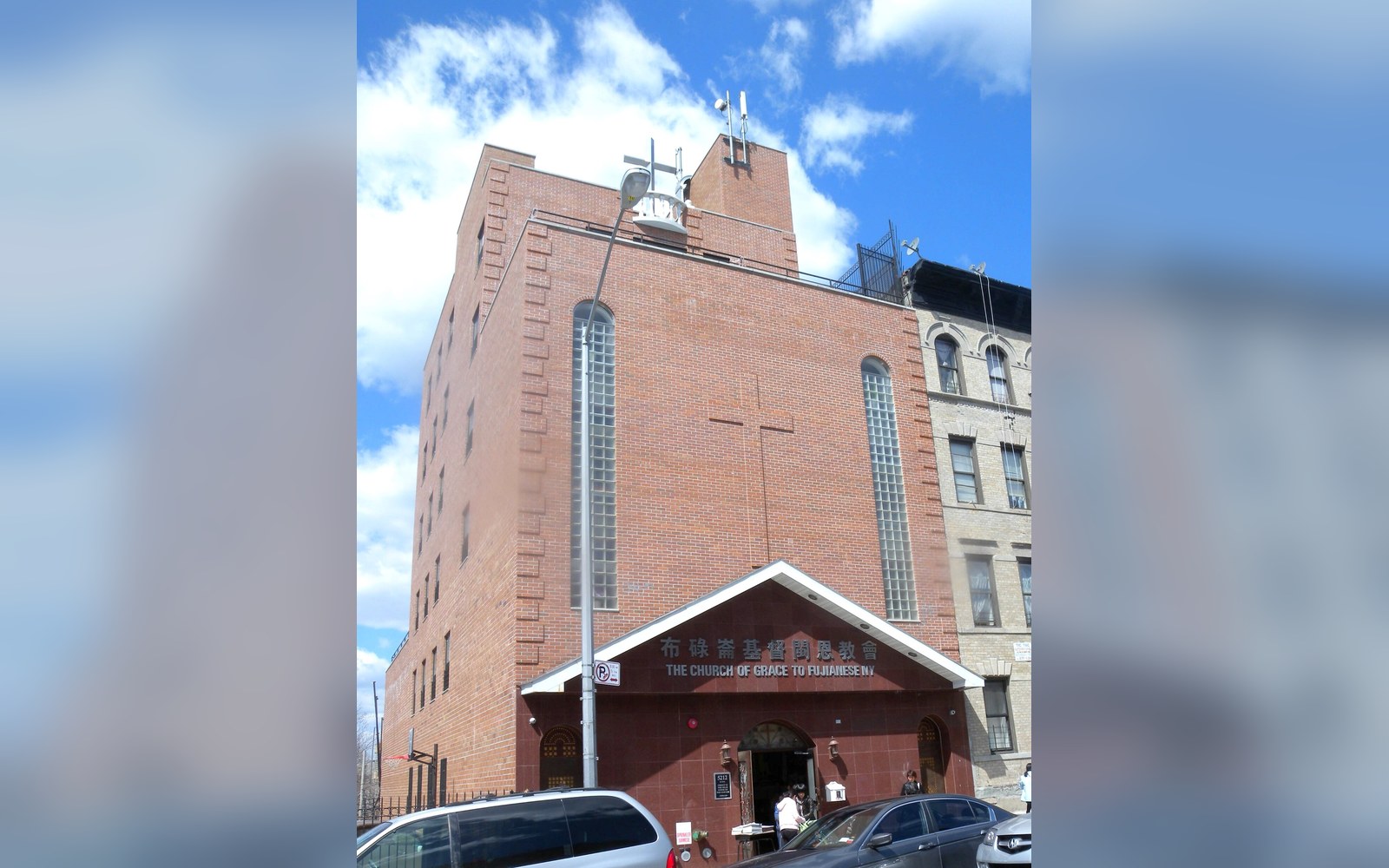
A brick church in Sunset Park with Chinese and English signage over the entrance
The neighbourhood uphill from the piers, which the terminal originally housed.Church of Grace to Fujianese, Sixth Avenue at 52nd Street · Wikimedia Commons

The bones of Bush's system are still readable on the ground. The buildings along 32nd to 39th Streets between Second and Third Avenues retain their broad freight bays, their heavy timber floors rated for industrial loads, and the raised loading docks that once met rail cars at grade. The grid of internal streets Bush built to move his locomotives has become a pedestrian and vehicle circulation system, but its dimensions — wide enough for a freight train, not quite right for anything else — give the place its particular character.

The shoreline itself carries the piers' footprint. Several of the original pier structures survive in altered form, and the waterfront's alignment, broken into the intervals Bush set for his berths, is still visible in aerial views and in the way the land meets the water. A walk south along the Brooklyn waterfront from the cruise terminal at Red Hook makes the scale of what was built here genuinely difficult to take in: pier after pier, building after building, the whole apparatus of a private port that lasted the better part of a century.

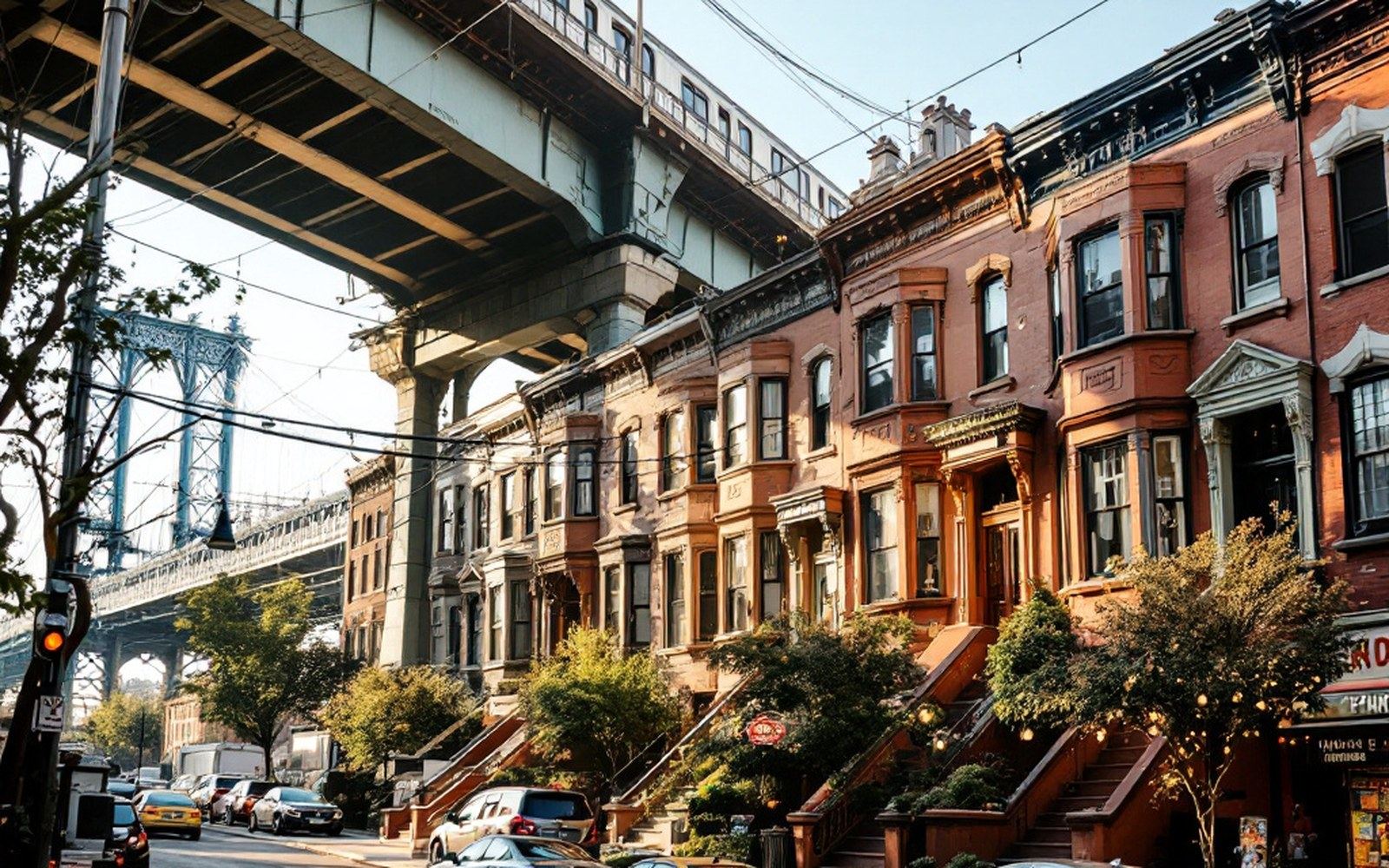
A row of brownstone stoops in late afternoon sun
Row houses on the slope above the working waterfront.

Irving Bush died in 1948, by which point the complex he had built was already beginning its long contraction. What he left behind was not a ruin but a skeleton — structural, spatial and civic — that has proved stubborn enough to outlast every subsequent idea about what a waterfront is supposed to be.

Chronology

  1. 1895Irving T. Bush begins redevelopment of the oil depot site
  2. Early 1900sfull terminal operational with internal railway and eleven-story loft buildings
  3. World War IUS Army quartermaster corps uses complex as primary supply depot
  4. 1960scontainerization shifts port traffic to New Jersey; decline begins
  5. 1970scomplex largely vacant
  6. Post-1970sCity of New York acquires portion; becomes Sunset Park Marine Terminal
  7. c. 2013private portion redeveloped as Industry City

How the system worked

  • Car-float bargesflat-decked vessels that carried freight railcars across New York Harbor from New Jersey rail yards, bypassing Manhattan
  • Internal locomotivesBush Terminal's own engines moved cars between pier and building
  • Loft floor loadsupper floors rated for industrial machinery, not just storage
  • Shared utilitiessteam heat and power generated centrally and piped to tenants

More from SUNSET PARK