Where Ebbets Field stood, a housing complex holds the name and the memory.
The Field, the Demolition, the Address
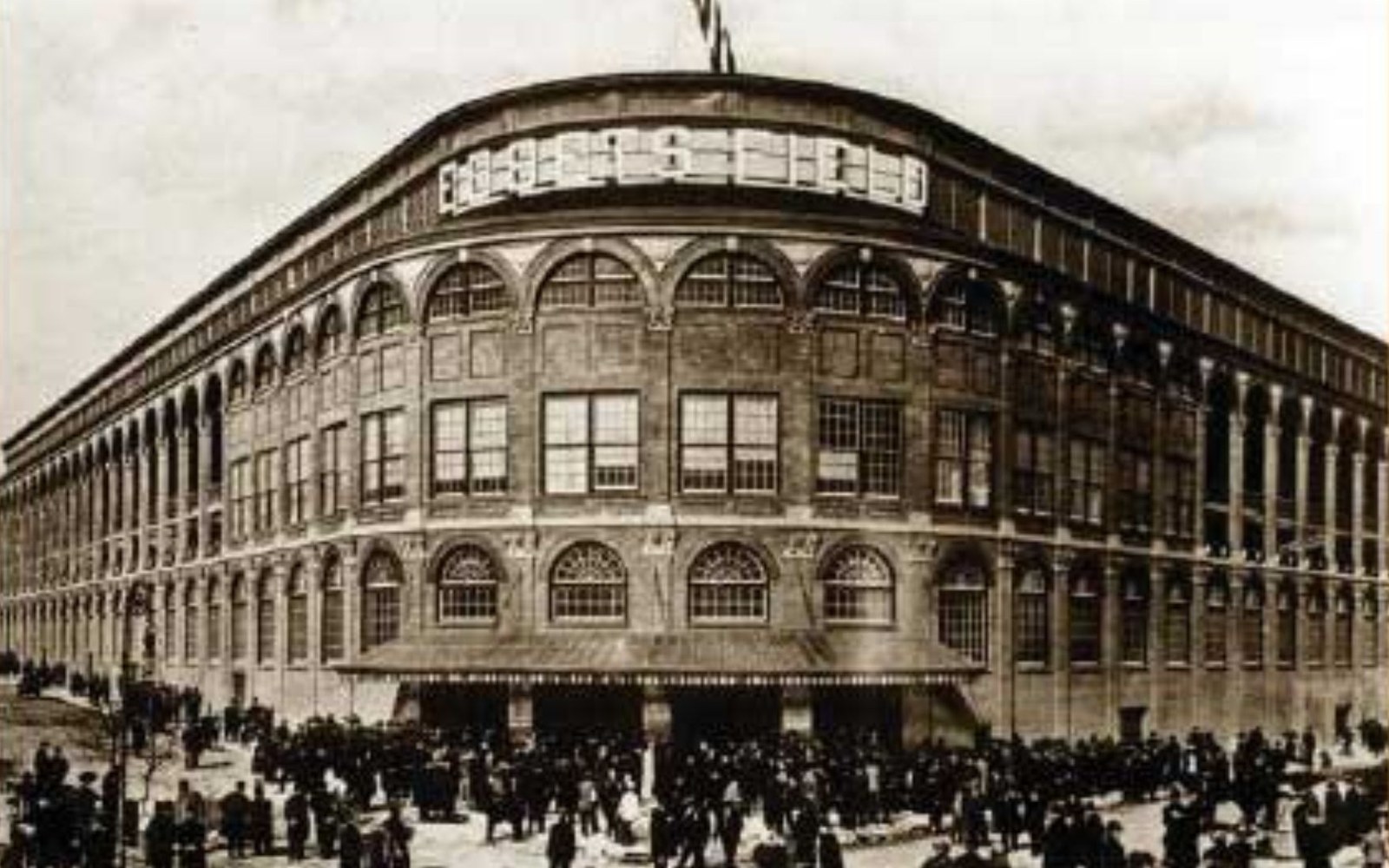
Ebbets Field ↗ opened in 1913, carved out of a Flatbush neighborhood then known as Pigtown for the market gardens and refuse dumps that preceded it. Charles Ebbets bought up the lots piecemeal, kept his intentions quiet for as long as he could, and built a double-decked steel-and-concrete stadium that held, at its peak, around thirty-two thousand people. For four decades it was compact, loud and intimate in the way that only a ballpark hemmed in by row houses on every side can be. The upper deck was close enough to the field that you could hear a third baseman argue. The rotunda entrance, with its Italian marble floor and chandelier made of baseball bats and gilded balls, was the grandest room in Flatbush.
The Brooklyn Dodgers left for Los Angeles after the 1957 season. Owner Walter O'Malley wanted a new stadium and a larger territory; the city, under Robert Moses, would not deliver the site he had in mind. Whether that was a failure of negotiation or a failure of will on the city's part has been argued ever since, but the outcome is not in dispute. Brooklyn's National League franchise relocated, and Ebbets Field sat empty. In 1960 a wrecking ball on a crane, painted to resemble a baseball, struck the rotunda wall. The demolition took weeks.
What replaced it was the Ebbets Field Apartments, a middle-income residential complex that opened in the early 1960s and still stands. The towers are of their moment — brick, plainly utilitarian, the grammar of New York public and semi-public housing in the postwar decades — and they carry the name of the thing they displaced. It is an odd kind of monument, a building that names itself after the absence it created.
What the Name Actually Remembers
The reason people still look for the address, still photograph the low marker on the sidewalk, is not the rotunda or the pennant races of the 1940s, though those matter. It is one afternoon: April 15, 1947, when Jackie Robinson took the field for the Dodgers as the first Black player in Major League Baseball's modern era. Robinson, born in Georgia, had grown up in Pasadena, California, played for the Kansas City Monarchs in the Negro Leagues, and was recruited by Dodgers general manager Branch Rickey specifically to break the color line — a project Rickey had been developing in private for years. The weight Robinson carried that season, in terms of the hostility he absorbed from opposing teams and some of his own, is documented in enough testimony to fill a library.
Ebbets Field is where it happened. The borough understood what it had witnessed, even if the rest of the country took longer. Robinson went on to win the inaugural Rookie of the Year Award and, in 1949, the National League batting title and MVP. He was inducted into the Baseball Hall of Fame ↗ in 1962, the first year he was eligible. He lived in the borough, shopped in it, was part of it in the way a franchise player can be when the city is still a city of neighborhoods and not of arenas behind transit hubs.