The parade on Eastern Parkway is among the largest in North America and it is a Brooklyn institution with a Trinidadian origin.
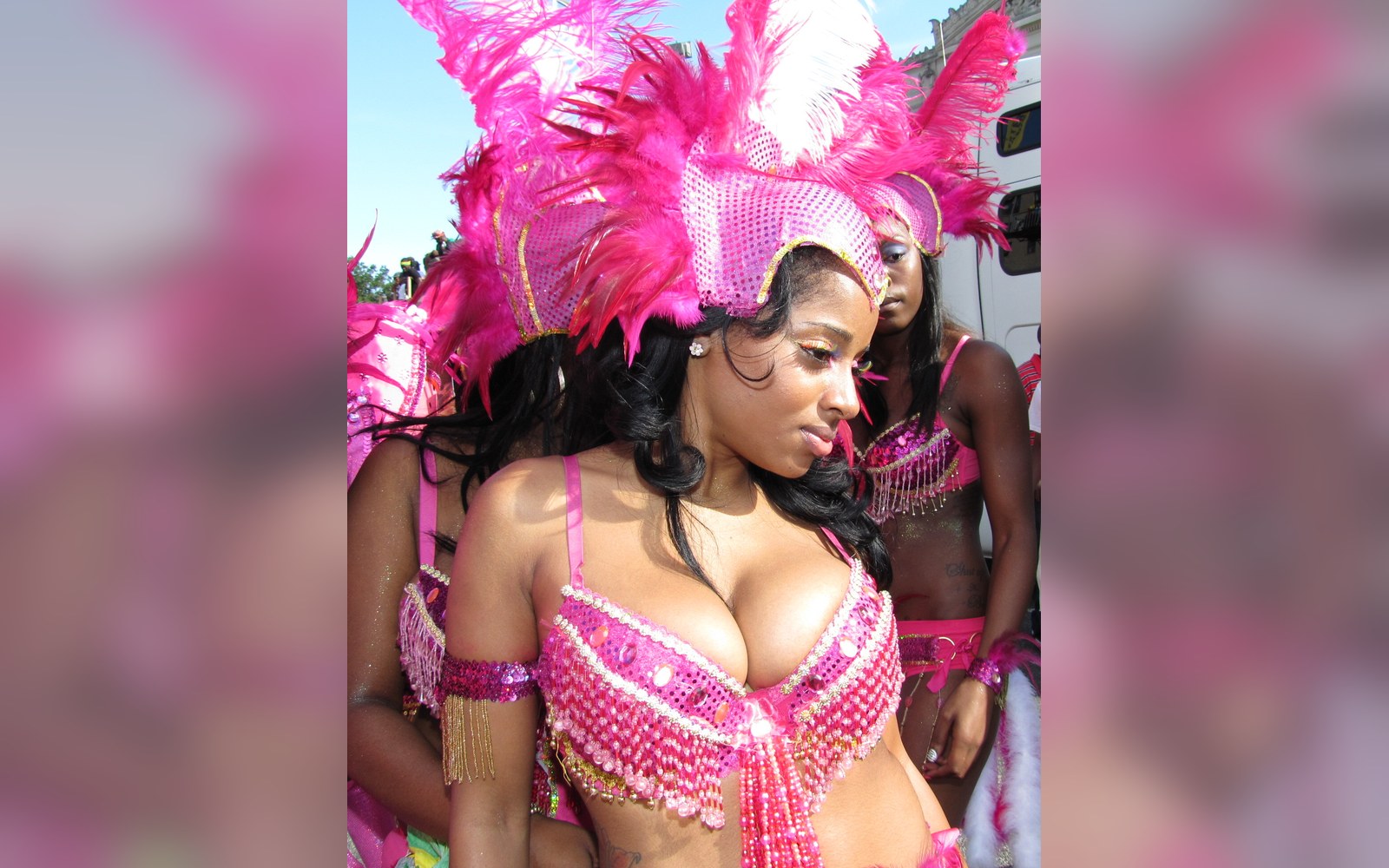
Costume in the staging area, before the Eastern Parkway route opens.Brooklyn carnival parade, 2010 · Wikimedia Commons
The parade on Eastern Parkway has drawn millions and closed a boulevard for half a century. It started in a living room.
A Trinidadian tradition finds a new address
Carnival — mas, in the Trinidad vernacular — is older than Brooklyn's claim on it. The form that arrived in the borough traces to the emancipation of enslaved people in Trinidad in 1834, when formerly enslaved Africans took to the streets in the tradition their enslavers had kept for themselves. Over generations it fused with calypso, with steelpan, with elaborate costumed bands, and by the time large-scale Caribbean migration to New York began in the early twentieth century, it was the central civic and creative ritual of Trinidadian life.
The New York version started in Harlem. Jessie Waddle is credited with organizing the first American mas in 1947, but the event that gave it shape and continuity was driven by Rufus Gorin and, above all, by Trinidadian-born costume designer and promoter Carlos Lezama. When New York's carnival moved — driven out of Harlem in the 1960s, briefly held indoors, then resettled as the neighbourhood demographics of Brooklyn shifted with the great postwar Caribbean migration — Lezama brought it to Eastern Parkway in 1969. He ran the West Indian American Day Association (WIADCA), which has organized the parade every year since, and he kept it alive through decades when city support was thin and crowds were uncertain.
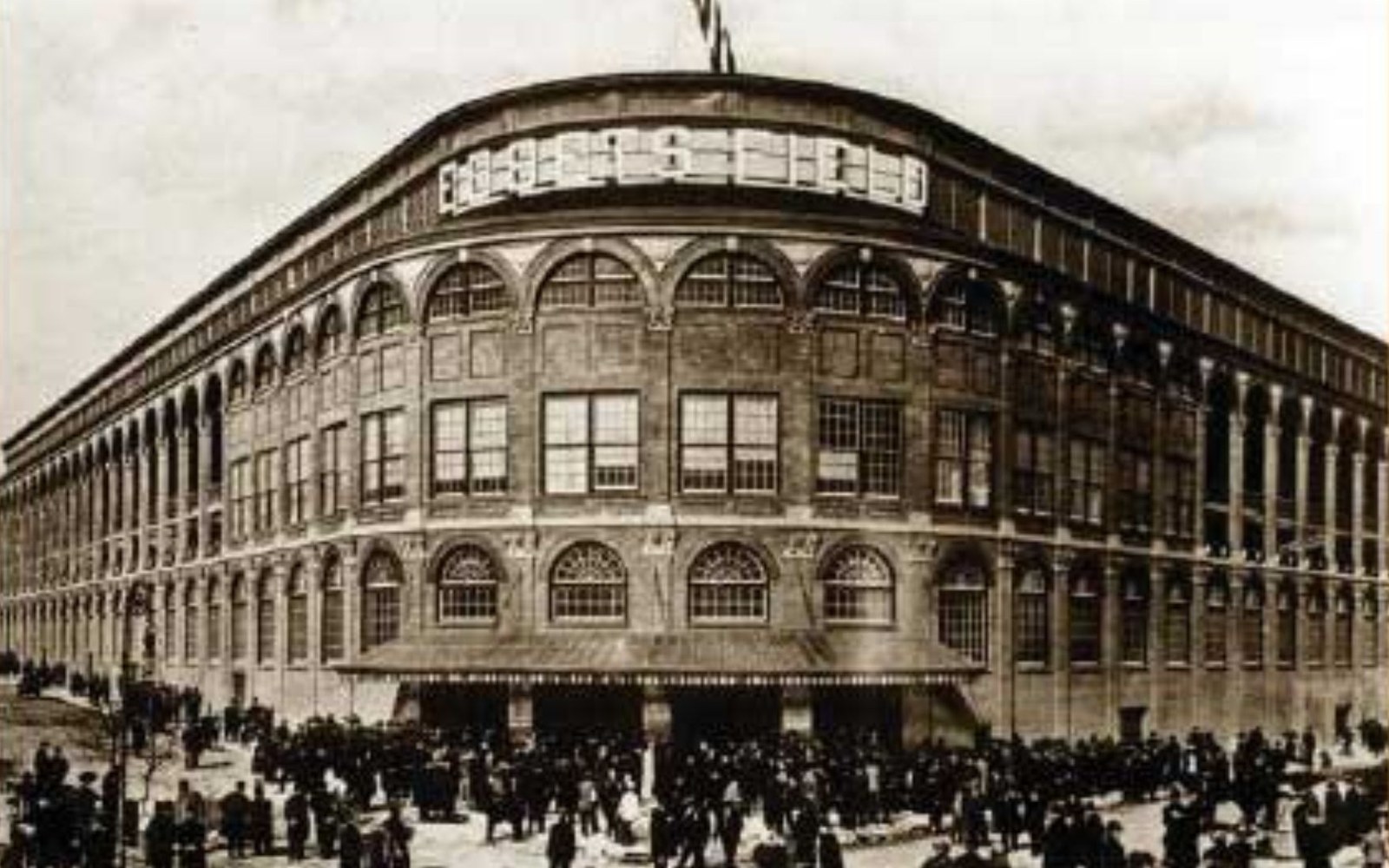
Opening day at Ebbets Field, 1913 — the other thing this stretch of Brooklyn is known for.Ebbets Field, opening day 1913 · Wikimedia Commons
Eastern Parkway was not an arbitrary choice. Designed by Frederick Law Olmsted and Calvert Vaux and completed in 1874, it is considered the first parkway in the United States ↗, a six-lane divided boulevard with service roads and a central promenade planted with elms. It is wide enough to hold a procession of this scale and ceremonial enough to deserve one. The parkway begins at Grand Army Plaza and runs east through Crown Heights and into Brownsville, and on Labor Day it becomes something that Olmsted almost certainly never imagined: the central artery of a Caribbean city temporarily installed inside Brooklyn.
What moves and what it means
The parade begins early on the first Monday of September. It runs from Utica Avenue west toward Grand Army Plaza, a distance of roughly two miles, and by mid-afternoon the crowds along the route number in the millions. Official estimates have varied, and the true figure is contested, but by most accounts the West Indian American Day Parade is routinely among the largest annual parades in North America. The NYPD closes the parkway to traffic; the city's sound system regulations apply; the steel pan orchestras warm up for days.
The mas bands are the spine of the parade. Each band — which is less an ensemble than a costumed collective, sometimes numbering hundreds of people — moves behind a truck carrying a sound system and a designer's vision executed in feathers, metalwork, sequined fabric and wire. The mas bands compete for titles, and the costume construction that drives competition begins months in advance in workshops across Flatbush and Crown Heights. The designs are elaborate to a degree that photographs do not convey: full fantasy costumes with headdresses taller than the wearer, constructed from materials that must survive a day of dancing on asphalt in September heat.
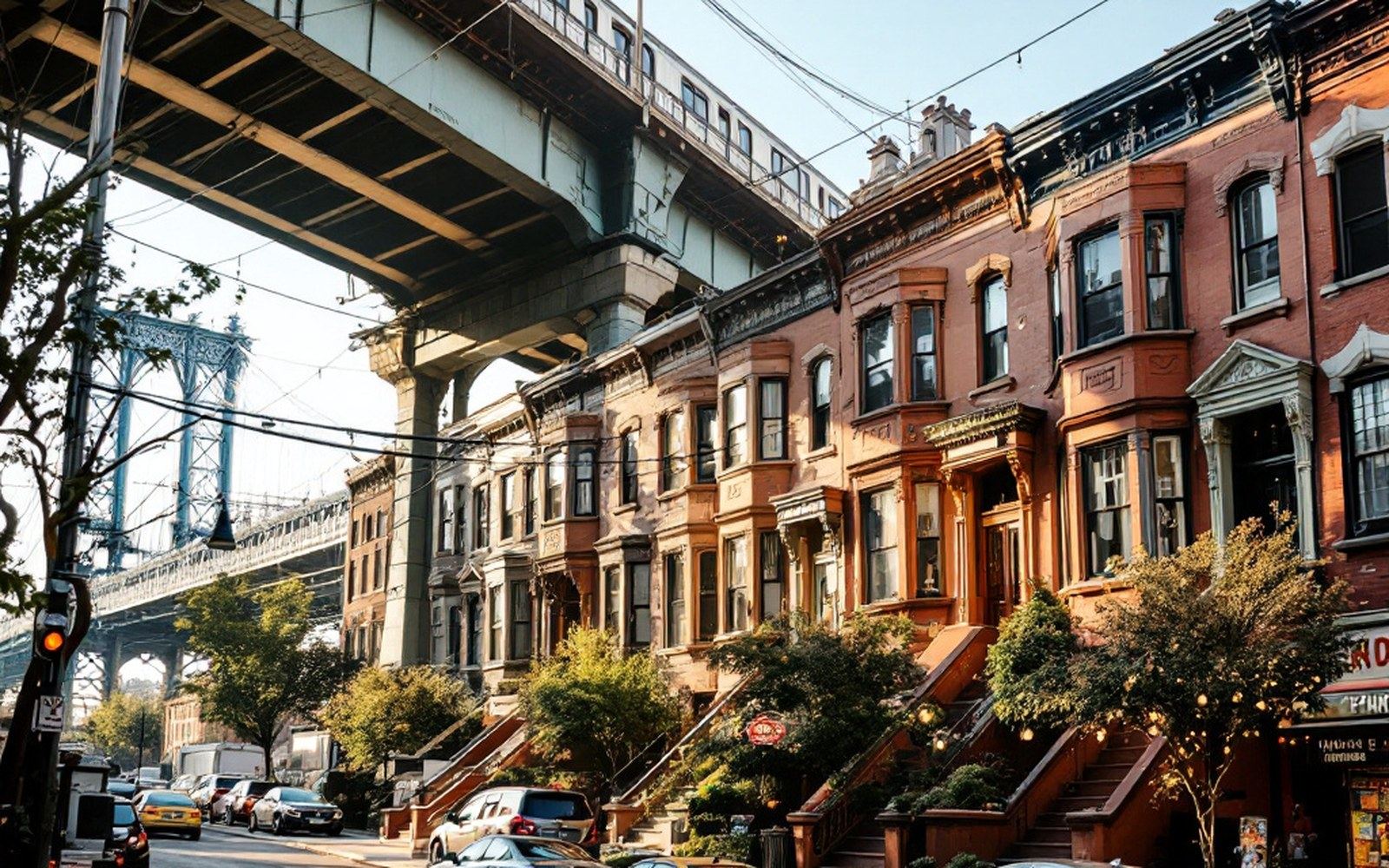
The blocks the parade route passes through.
Steelpan is essential and distinct. The instrument was invented in Trinidad in the 1930s, fashioned from oil drums — a country with petroleum and a tradition of rhythm finding its synthesis — and it is the only acoustic instrument invented in the twentieth century to achieve serious classical and popular reach. Panorama competitions, in which pan orchestras play extended arrangements of calypso and soca compositions, are held the night before the main parade. These are not warm-up events. They draw serious listeners and carry the same competitive intensity as the mas band judging.
Soca — a contraction of soul and calypso — drives the parade's sonic atmosphere in the twenty-first century. The genre emerged in Trinidad in the 1970s as calypso accelerated into something faster and more physically demanding, and in Brooklyn it has become the register in which the carnival is pitched to a generation born in America rather than the Caribbean. The DJs on the sound trucks play new soca through the summer; the songs that dominate the parade circuit in Brooklyn are often the same songs that dominated Trinidad's carnival in February.
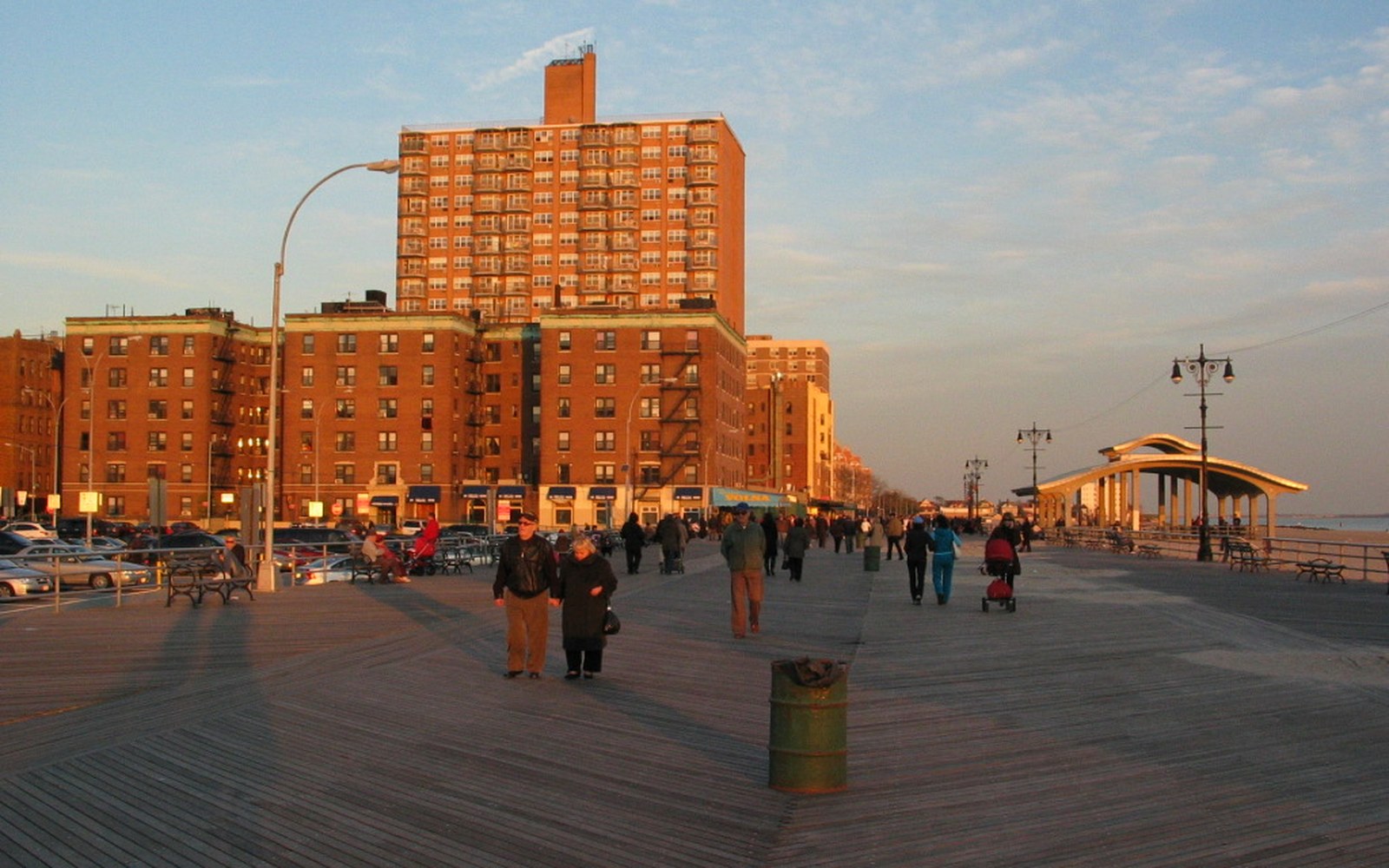
Labor Day weekend also empties half of Brooklyn onto the shoreline.Brighton Beach, Riegelmann Boardwalk at Brighton 4th Street · Wikimedia Commons
Chronology
1834Emancipation in Trinidad; mas traditions open to formerly enslaved Africans
1874Eastern Parkway completed by Olmsted and Vaux
1947First organised American mas in Harlem, associated with Jessie Waddle
1965Immigration and Nationality Act reshapes Caribbean migration to the US
1969West Indian American Day Parade moves to Eastern Parkway under Carlos Lezama
2014Carlos Lezama dies; WIADCA continues
What moves through the parade
Mas bandscostumed collectives, each moving behind a sound truck, competing for design titles
Steelpan orchestras (panoramas)compete the night before in a separate judging event
Sound trucksDJs playing soca, the post-1970s acceleration of calypso
Street food corridorjerk, doubles, roti, oxtail, sorrel along the service roads
The borough it belongs to
The West Indian community that made this parade and maintains it is not a monolith. The term encompasses Trinidadians, Jamaicans, Barbadians, Guyanese, Belizeans, Haitians and others, and the distinctions between those communities — culinary, musical, religious, political — are real and maintained. What the parade does is hold a space where those distinctions are present and a shared Caribbean-American identity is also asserted, loudly and in sequins.
Crown Heights and Flatbush are the residential anchors of this community. The Caribbean migration that built these neighbourhoods moved in phases: a wave in the first decades of the twentieth century, a much larger wave after the Immigration and Nationality Act of 1965 dismantled the national-origins quota system that had kept Caribbean migration artificially low. By the 1970s and 1980s the communities along Nostrand Avenue, Flatbush Avenue and Church Avenue had the density and the institutional life — churches, sound system crews, record shops, patty bakeries — that a carnival of this scale requires to sustain itself.
The parade's politics have never been absent from the event. Eastern Parkway has been a place where Caribbean-American political candidates seek visibility, where labour issues surface on floats, where the tensions of being Black and immigrant in New York City are neither hidden nor, on this day, the point. The day is for mas. The cooking that lines the service roads — jerk, doubles, roti, oxtail, sorrel — is its own argument about the depth of what has been brought here and kept alive.
Lezama died in 2014. The WIADCA continues, the parade continues, and each September the parkway fills with the largest gathering Brooklyn produces in any given year. The city that contains it tends to call it a cultural event, which is accurate and not quite sufficient. It is also a claim — made in feathers and oil-drum harmonics and three million people on a boulevard — that this borough's story belongs to the Caribbean as much as to anywhere else that ever sent people here.