NY LOFTAn independent guide to five Brooklyn neighbourhoods and the things built in them.

RED HOOK

A concrete terminal that never really worked

The Red Hook grain terminal was built for a canal trade that had already moved. It has stood empty for most of its life.

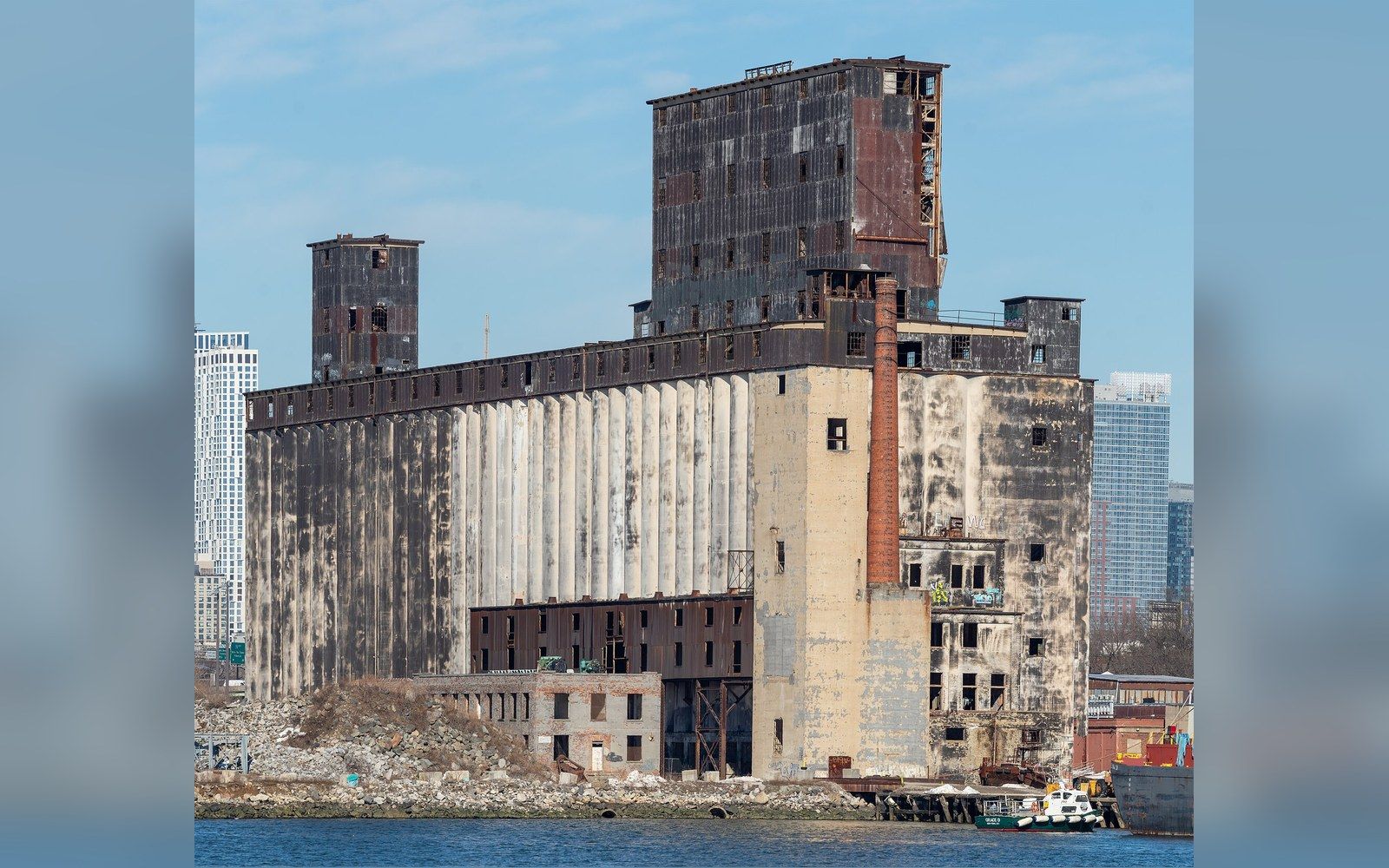
A vast concrete grain elevator on a derelict waterfront
Twelve storeys of concrete bins on the Erie Basin, roofless in places.Red Hook grain terminal · Wikimedia Commons

Built for a trade already leaving

The Red Hook grain terminal stands at the foot of Columbia Street like a lesson in mistiming. Completed in 1922, the structure was designed to receive grain from Great Lakes barges passing through the Erie Canal, offload it into reinforced-concrete silos, and transfer it to oceangoing ships. It was, in engineering terms, a serious piece of infrastructure: a row of cylindrical silos rising roughly twelve storeys, linked by a concrete headhouse, capable of holding millions of bushels. It was also, almost immediately, obsolete.

The Erie Canal had been the spine of American interior trade since 1825, funnelling wheat and corn from the Midwest to the Atlantic seaboard. But by the time the Red Hook grain terminal received its first shipment, rail had long displaced the canal as the primary freight route for bulk grain. The barge trade was a remnant economy, and the terminal had been engineered for a volume that would never arrive. It processed grain intermittently across the middle decades of the century and then, by the early 1960s, effectively stopped. No dramatic closure, no announcement — the trade simply moved on, and the building stayed.
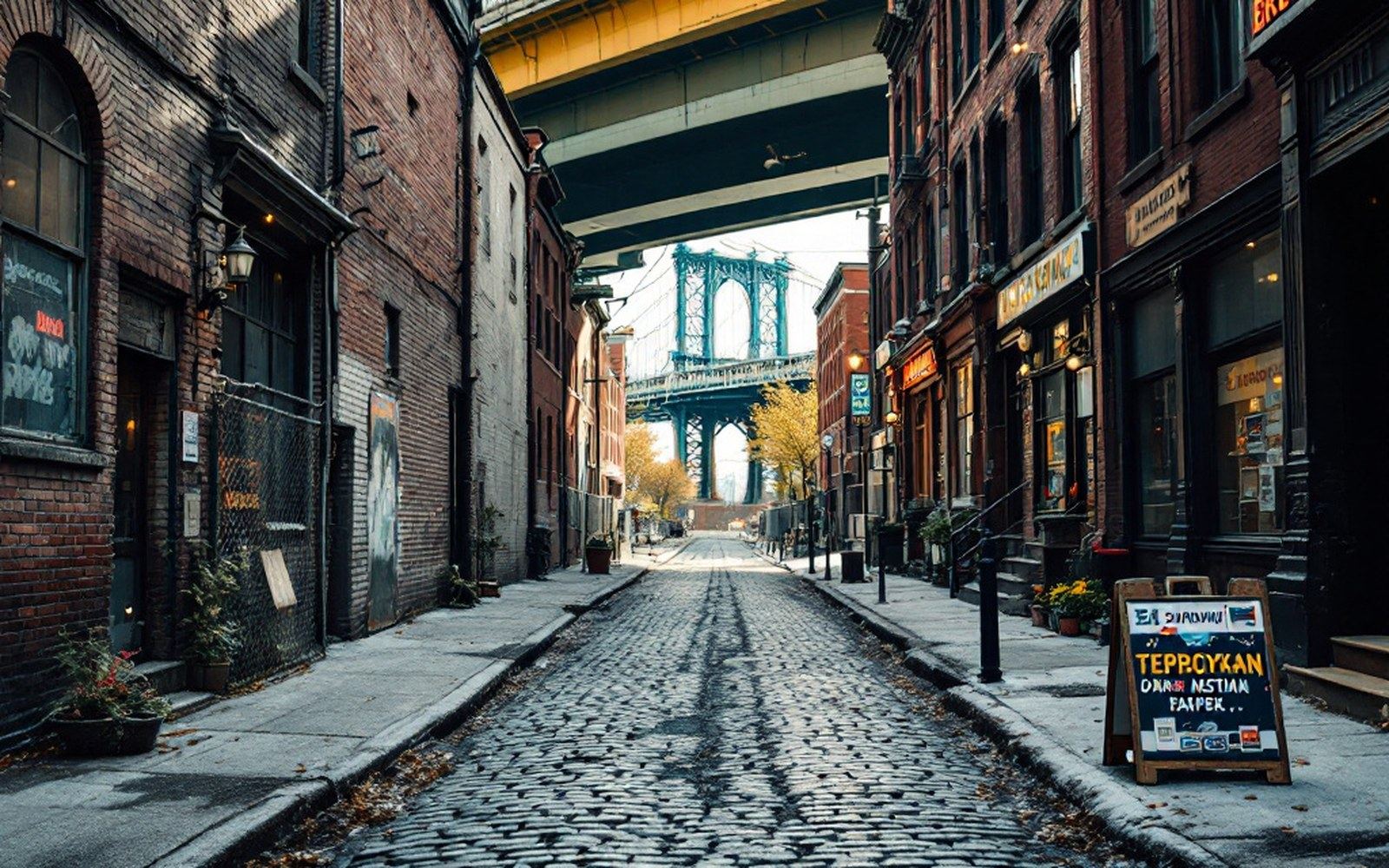
A cobbled Red Hook street beneath a raised expressway deck, warehouse brick alongside
The streets behind it, cut off from the rest of Brooklyn by the expressway.

What the structure is

What remains is one of the more remarkable pieces of industrial concrete ↗ in the northeastern United States. The method is slip-formed reinforced concrete, poured continuously in vertical sections without joints, which gives the silos their smooth, uninterrupted cylinder walls. The process, standard for large grain elevators of the era, produces structures that are extraordinarily resistant to demolition — the walls are thick, the concrete is dense, and the geometry distributes load in ways that defeat conventional wrecking. This is, in part, why the terminal still stands. Several attempts to demolish comparable grain elevators in other American cities have proven prohibitively expensive.

The New York City Buildings Department lists the Red Hook grain terminal among a set of structures with no current active use permit, meaning it sits in a kind of administrative suspension — present, load-bearing, technically owned (by the city, through the port authority's successor arrangements), and going nowhere fast. Its 2006 designation study by the New York City Landmarks Preservation Commission examined its historical significance ↗ but stopped short of landmark protection, leaving it in the familiar outer-borough limbo where a building is too large to ignore and too expensive to act on.
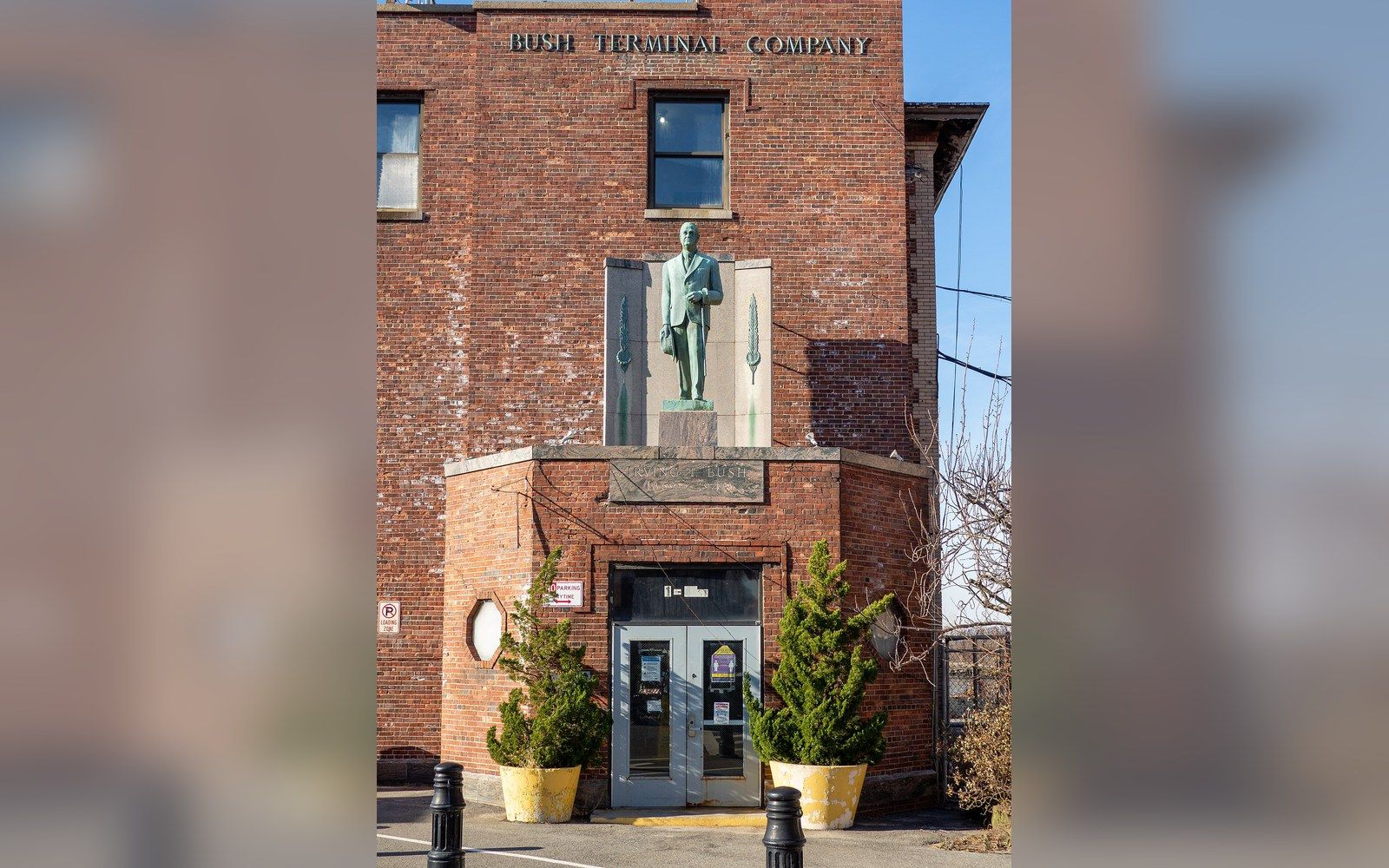
The Bush Terminal Company building with a bronze statue above its doorway
The working comparison: Bush Terminal kept its traffic.Bush Terminal Company · Wikimedia Commons

Chronology

  1. 1825Erie Canal opens, establishing the Great Lakes–Atlantic grain route
  2. 1922Red Hook grain terminal completed
  3. Early 1960sactive grain handling effectively ceases
  4. 2006NYC Landmarks Preservation Commission designation study conducted; landmark status not granted

Scale and method

  • Structure typeslip-formed reinforced concrete silos linked by a concrete headhouse
  • Approximate heightroughly twelve storeys
  • Capacitydesigned to hold millions of bushels of bulk grain
  • Ownershipheld by the city through successor arrangements to the port authority

What fifty years of vacancy looks like

From the water, the terminal reads as bulk and silence. The silos are pale grey in flat light, almost white in sun, and they dwarf everything around them. The surrounding blocks carry the remnants of the working waterfront — loading platforms, rail spurs, the particular scale of a neighbourhood built for freight rather than people. Red Hook's isolation, deepened by the elevated expressway that cut it from the rest of Brooklyn in the 1950s, meant that when the industrial economy retreated, very little followed it in. The terminal did not become lofts or condominiums. It did not attract a developer with a conversion plan. It sat.

Proposals have surfaced at intervals: grain storage again, film production, a kind of vertical greenhouse operation, public access to the silos as an acoustic space (the interior resonance is, by all accounts, extraordinary). None has advanced. The structure's sheer mass works against it in every scenario — any intervention requires the capital and engineering patience of a major public project.

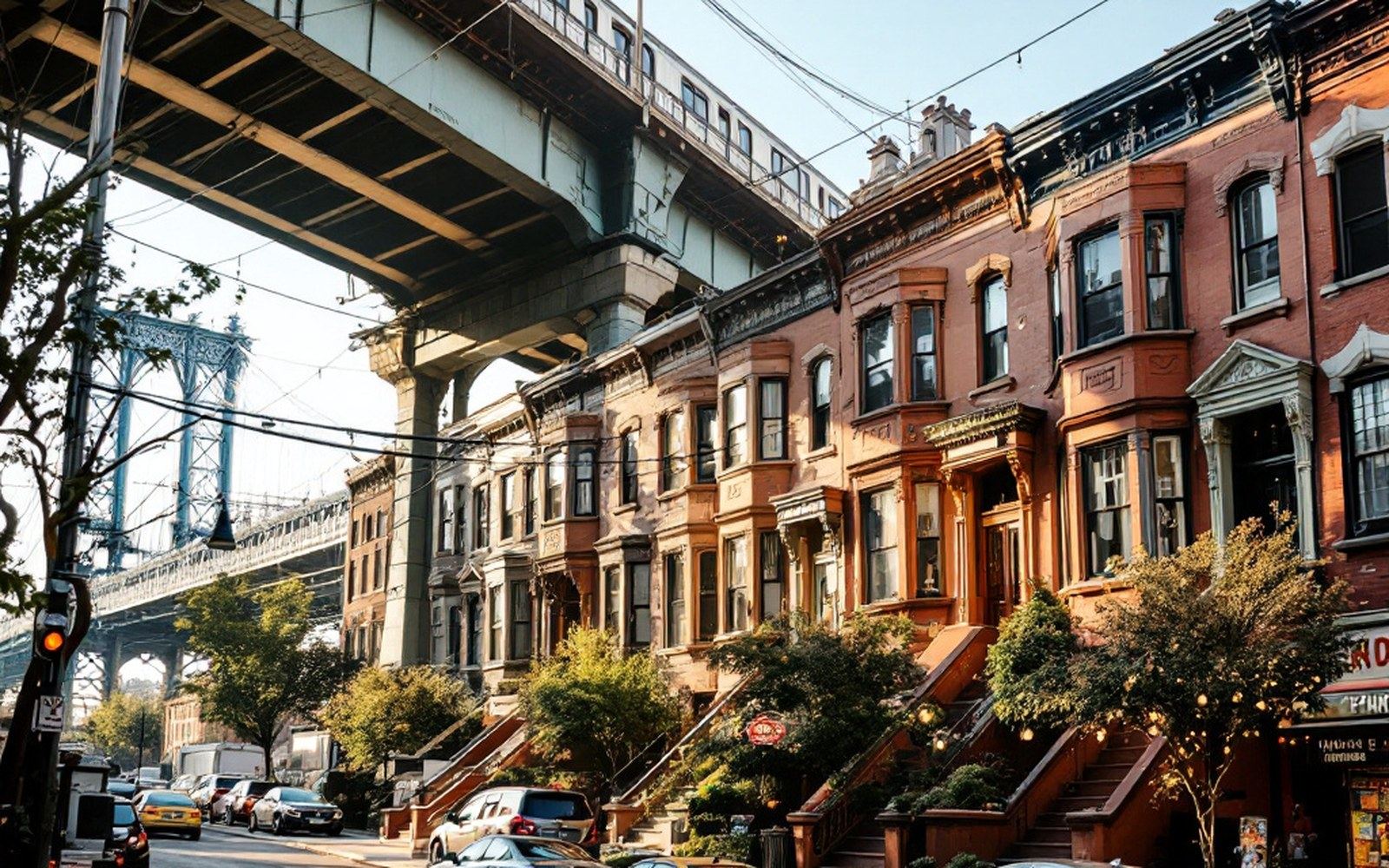
A row of brownstone stoops in late afternoon sun
Red Hook’s houses survived for the same reason its streets did.

What the terminal offers, for now, is scale. Standing on the Columbia Street pier and looking south, a person gets a reliable sense of what Red Hook was built to do: move bulk goods between water and land at industrial volume, without sentiment, and at a pace that made the neighbourhood's residential streets feel incidental. The grain never came in the quantities the silos were built for. The silos came anyway, and they are still there, waiting for a purpose that has not yet been invented.

More from RED HOOK