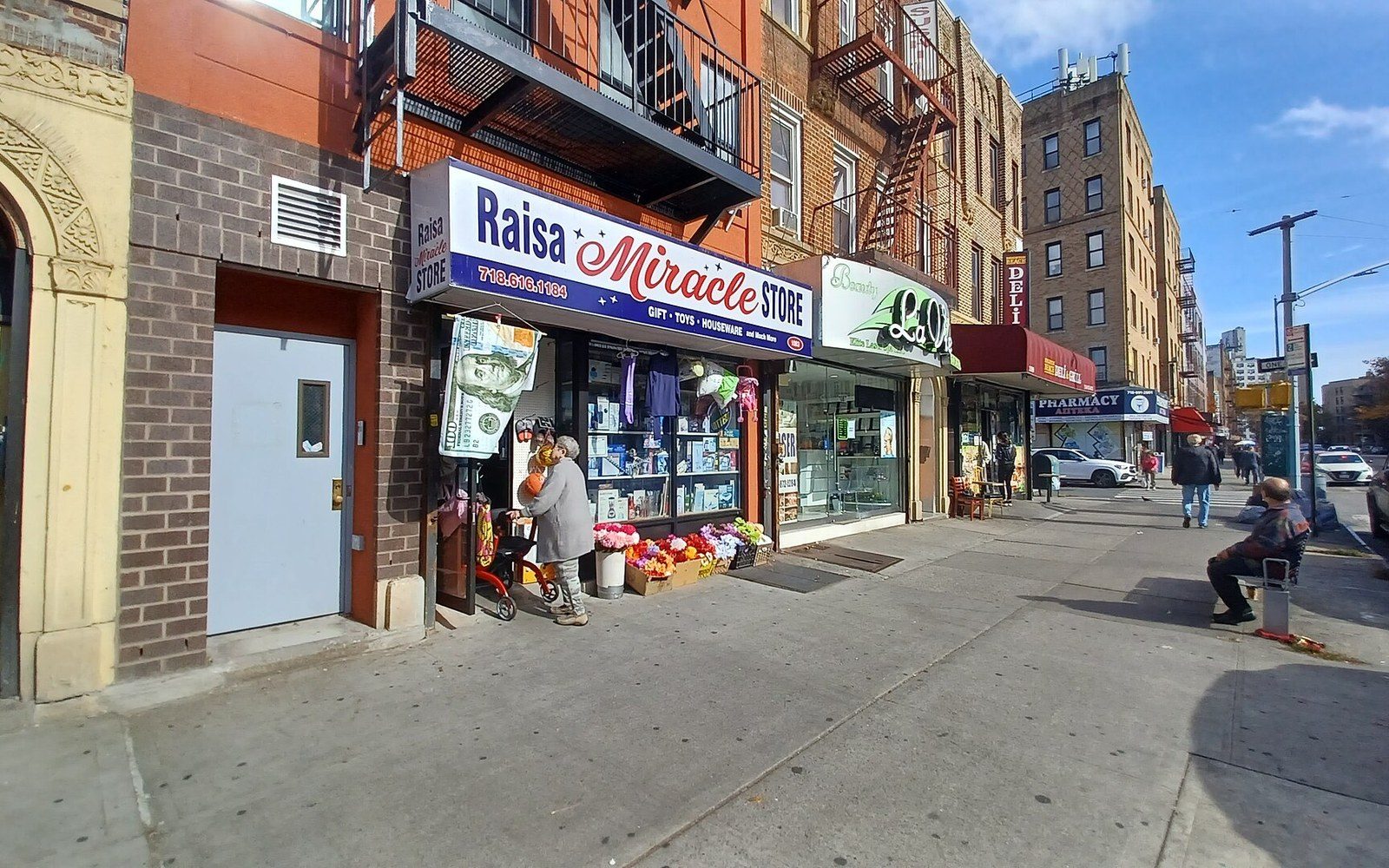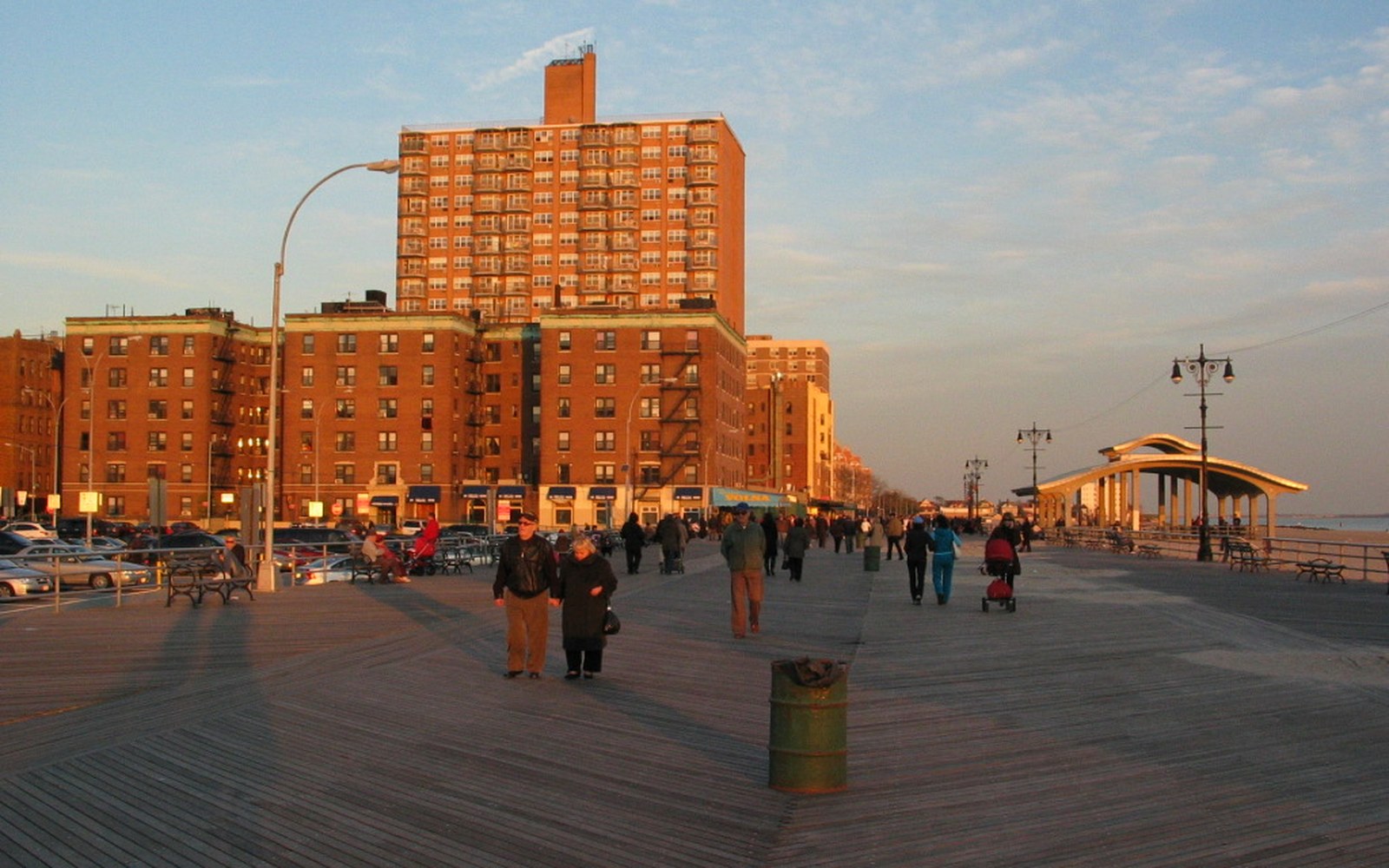
Brighton Beach Avenue lives in permanent shade — and has built an entire economy around it.
Iron overhead, commerce below
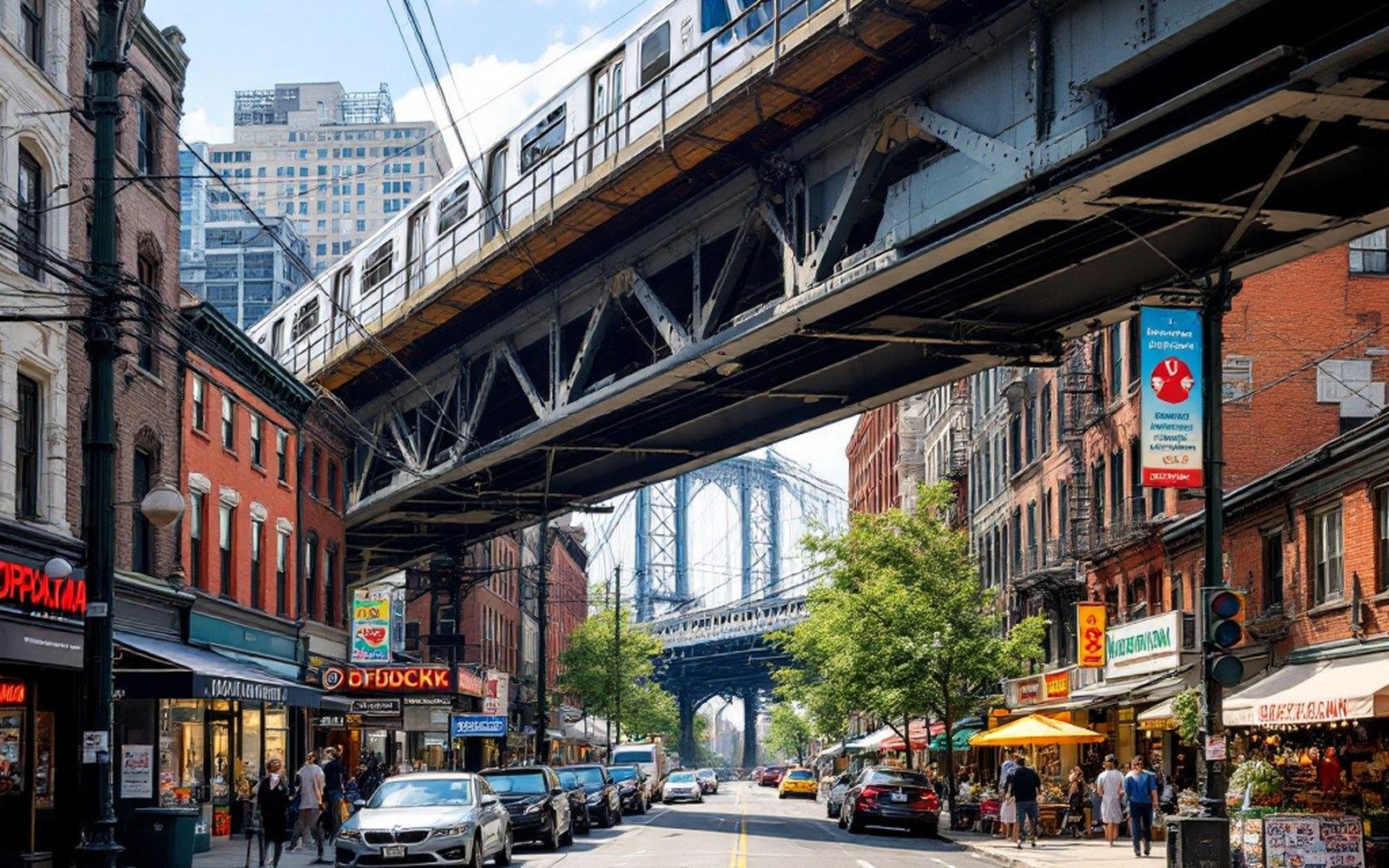
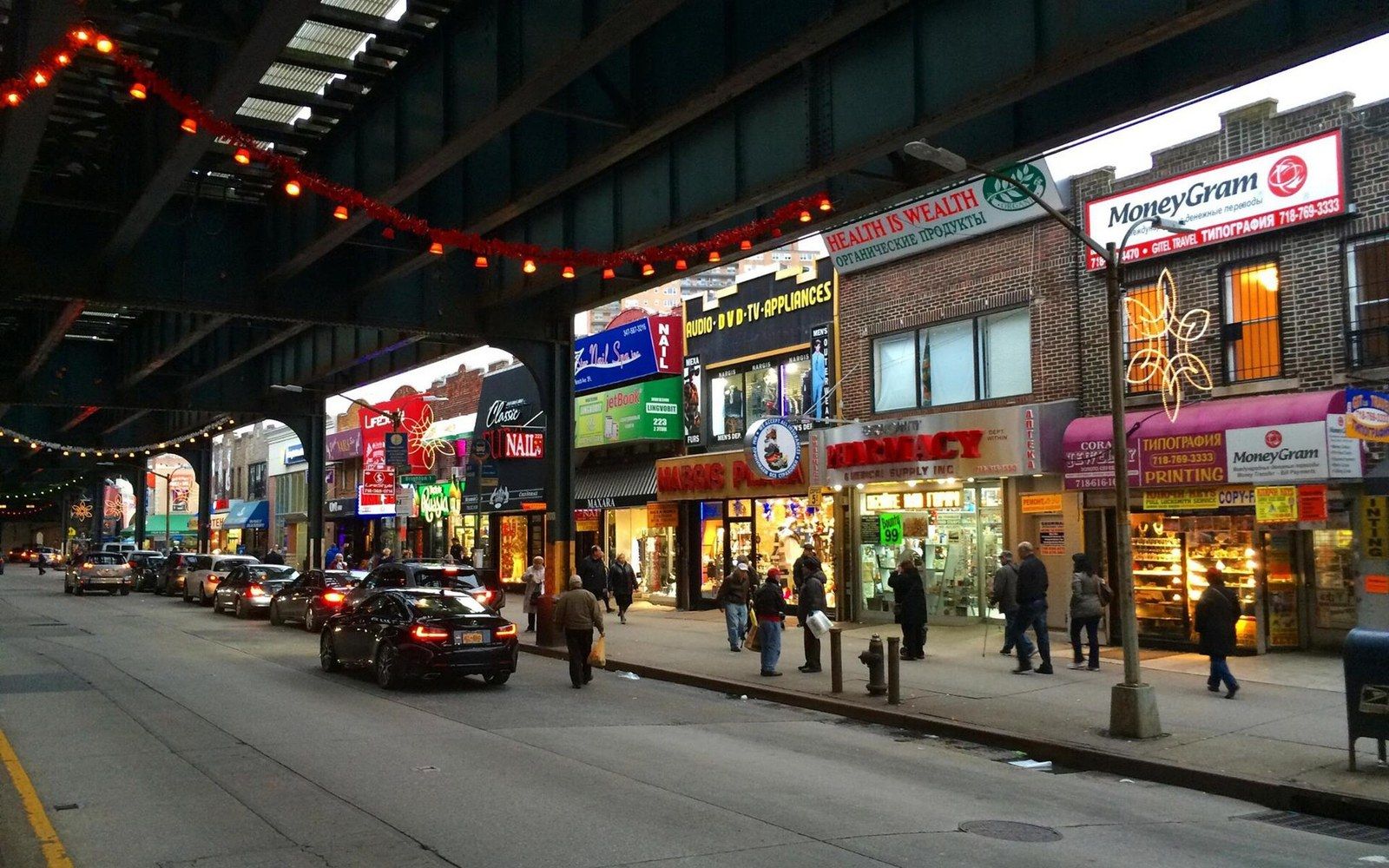
The B and Q trains ↗ do not stop being elevated when they reach Brighton Beach. They keep their height all the way from Coney Island, thundering down Brighton Beach Avenue on a steel viaduct that cuts the sky into strips. Below it, the avenue runs for several blocks as one of the most compressed commercial streets in Brooklyn: fishmongers, produce stands, bakeries selling black bread and honey cake, pharmacies stocked with Soviet-era remedies. The structure above is the reason this particular economy landed here and not somewhere sunnier.
Elevated lines — the el — arrived in Brooklyn in the late nineteenth century, extended by the Brooklyn-Manhattan Transit Corporation and eventually folded into the New York City Transit Authority ↗ in 1953. The Brighton line's southern stretch, which opened in stages during the 1870s and 1880s, was designed to connect central Brooklyn to the shore. It succeeded in ways its builders could not have predicted: it brought not just beachgoers but settlers, first the Jewish working class moving south from the Lower East Side and Brownsville, then, after 1972, Soviet Jewish émigrés whose arrival began to reshape the neighbourhood so thoroughly that Brighton Beach acquired a second name — Little Odessa — that has stuck ever since.
The viaduct as landlord
The el's structural logic is simple and brutal. Steel columns rise from the pavement at intervals, carrying girders, carrying track. Trains pass every few minutes during peak hours, and the sound is not background noise: it is the dominant fact of being on the avenue. Between trains, vendors call out in Russian, Armenian, Ukrainian. When a train arrives, conversation stops. The rhythm is so established that merchants factor it in without thinking.
What the viaduct also does is create rentable real estate in its own shadow. The blocks directly beneath the structure are cheaper to occupy than those on cross streets with full light and quiet; that differential has historically attracted the kinds of businesses — bulk food, discount goods, cash transactions — that operate on tight margins and need foot traffic more than atmosphere. Walk Brighton Beach Avenue and you are walking through a market whose character was partly set by a planning decision made over a century ago. The overhead structure functions, in effect, as a zoning instrument that nobody formally enacted.