The caissons beneath the Brooklyn Bridge towers introduced the world to a crippling illness that medicine had not yet named.
Sealed chambers under the river
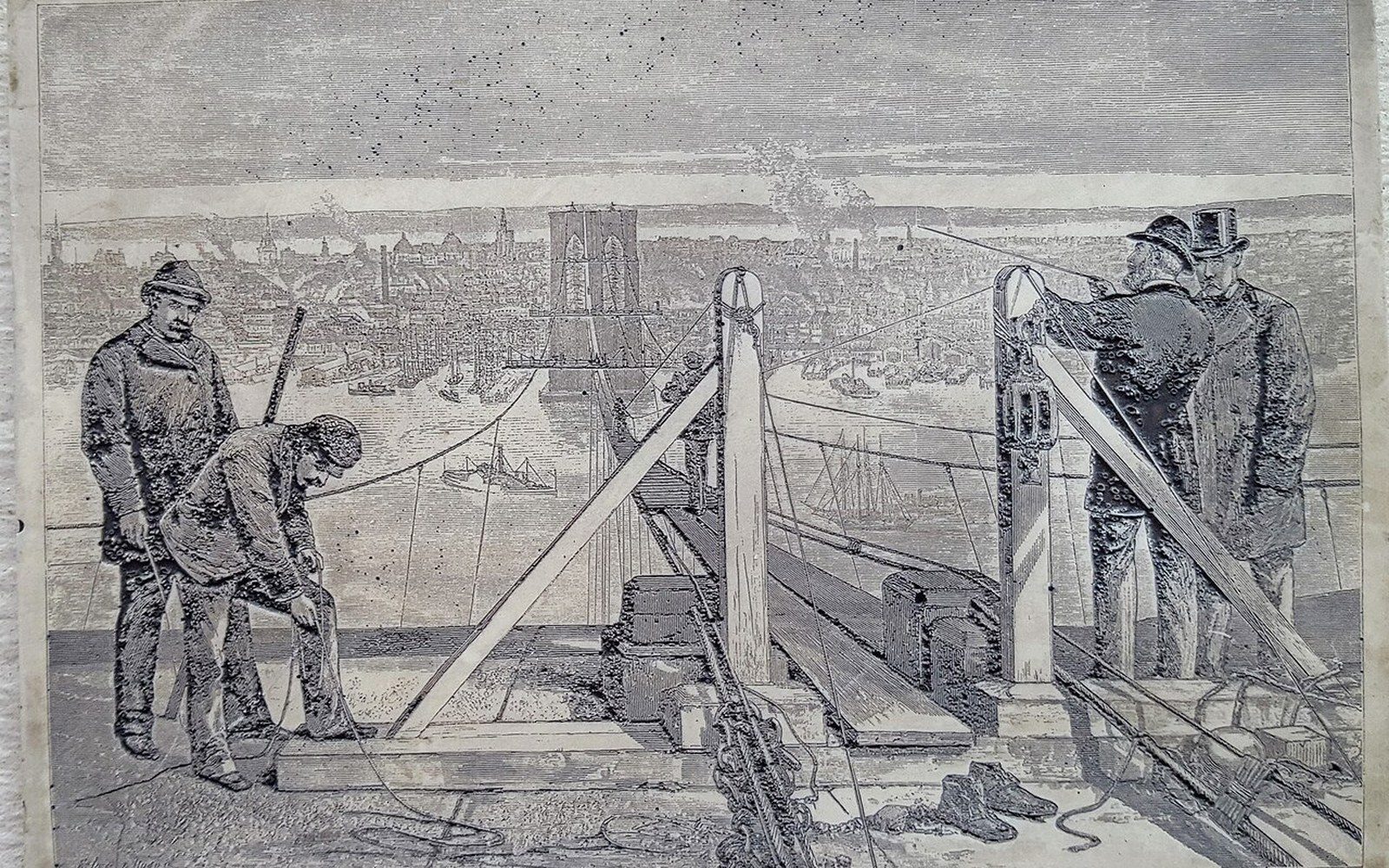
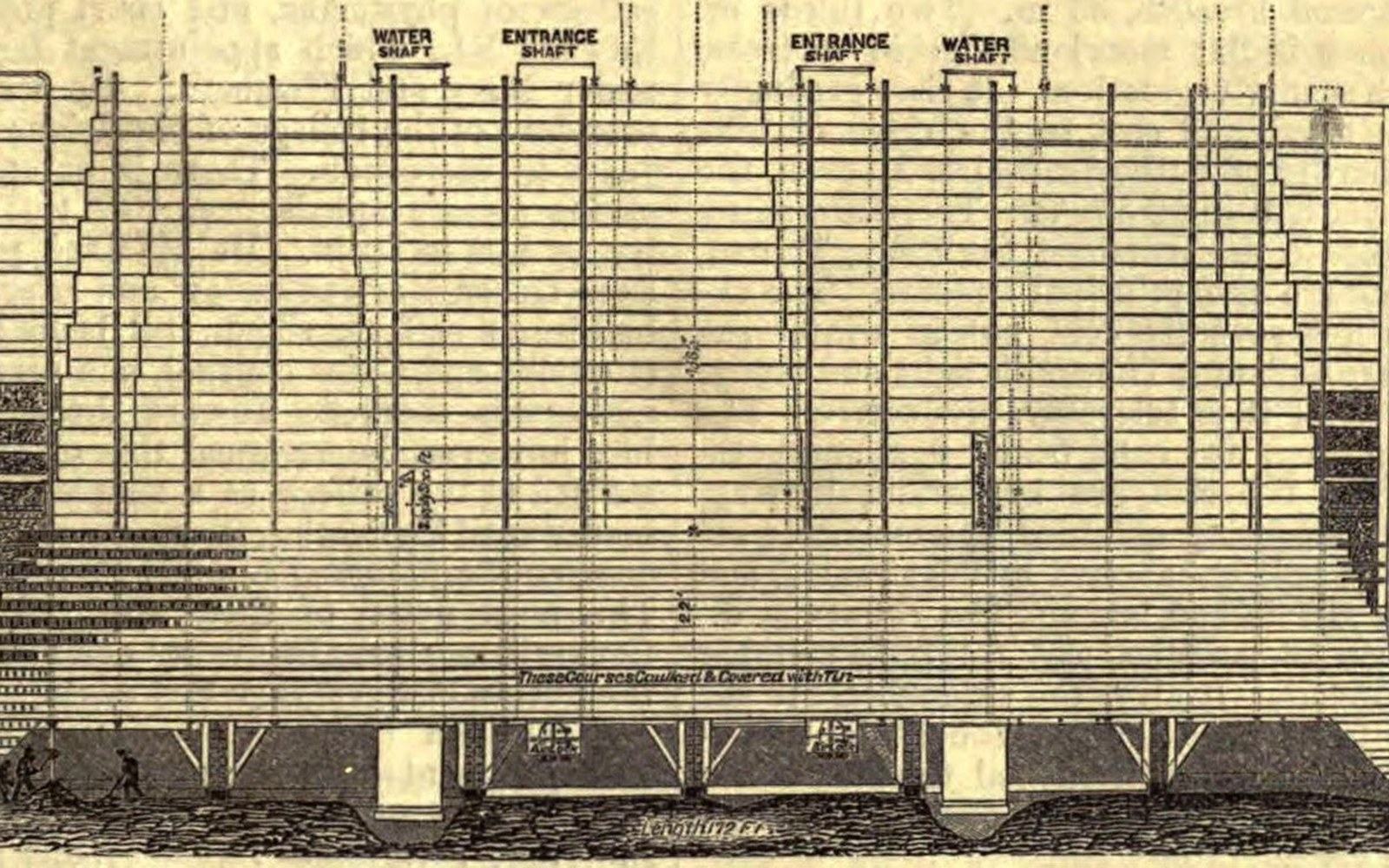
Before the first wire was strung, before the towers rose to their gothic peaks, someone had to dig into the floor of the East River and find bedrock. John A. Roebling's design called for two massive stone towers, and each one needed a footing planted deep enough to hold. The solution was the pneumatic caisson — a vast, airtight wooden chamber, open at the bottom, weighted down to the riverbed and pressurised with compressed air so that workers could dig inside it while the river was kept out.
The Brooklyn caisson was lowered into position in 1870. It was the size of a city block and made of yellow pine sheathed in iron, and inside it, men worked by gaslight in air forced to roughly double atmospheric pressure. Soil and rock came up through shafts; the chamber sank a little further with each day's excavation. When the Brooklyn side reached bedrock, about forty-four feet down, work stopped and the caisson was filled with concrete. The New York caisson went deeper — eventually to seventy-eight feet — and the compressed air at that depth was fiercer, the work stranger, the consequences worse.
The name the bridge gave to the illness
Workers coming up from the caissons had begun to report something troubling before anyone understood what was causing it. The pain came on after they climbed out — joint agony, paralysis, collapse. Some died. Some were permanently crippled. The men called it, with black economy, the bends, because of the way victims contorted. Doctors at the time offered no unified explanation.
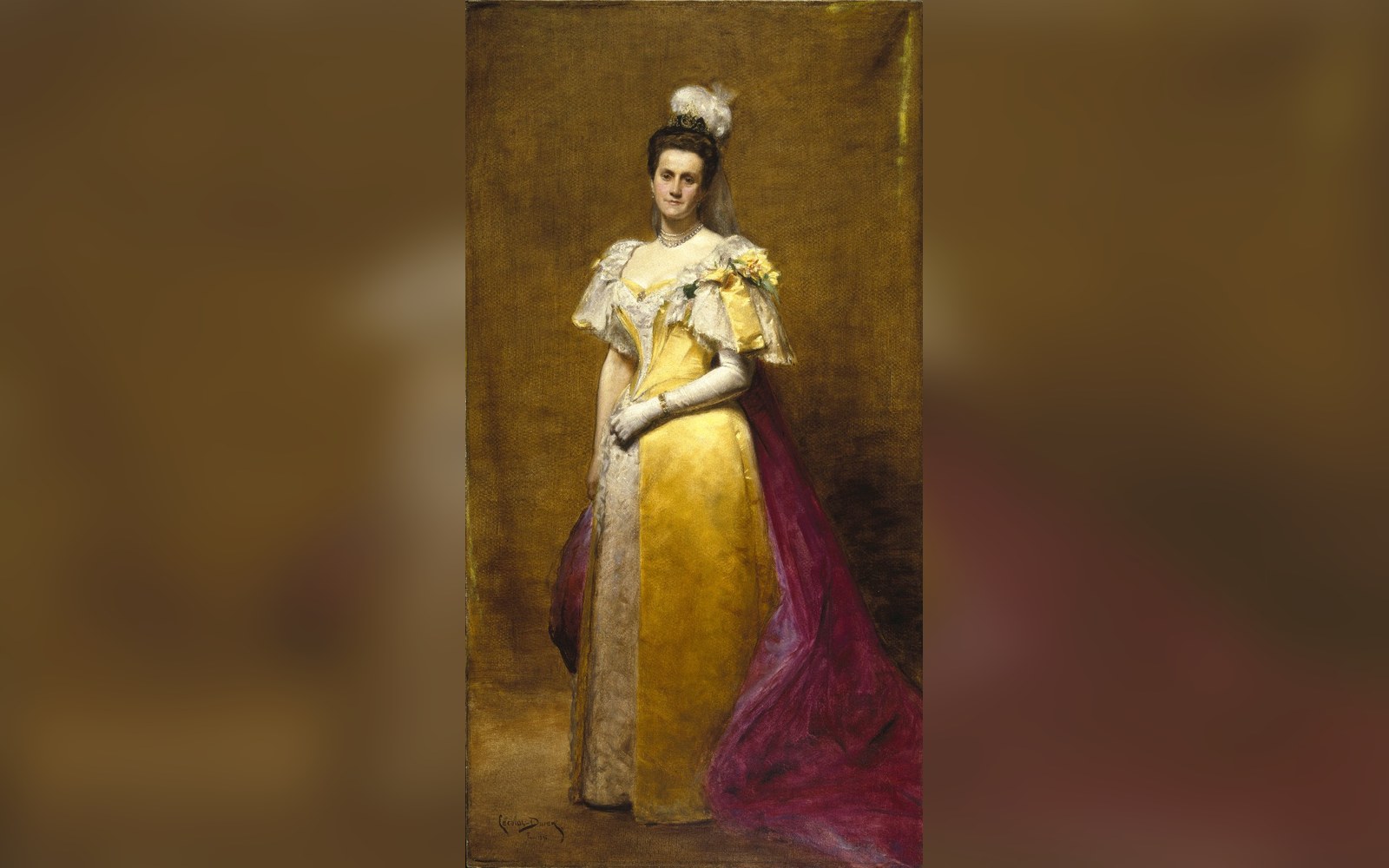
Washington Roebling, who had taken over as chief engineer after his father's death in 1869, went into the caissons himself — repeatedly, because that was what supervision required. By 1872 he was incapacitated, almost certainly by what we now call decompression sickness: nitrogen bubbles forming in the blood and tissues as pressure drops too fast during ascent. He would spend much of the bridge's remaining construction years directing from a Brooklyn Heights window. Washington's condition was extreme but not unique; the illness disabled or killed dozens of workers on both caissons ↗ before the bridge opened.