Roebling used steel wire when everyone else used iron
The Brooklyn Bridge opened in 1883 with steel-wire cables, a first at that scale, and a contractor who supplied substandard wire anyway. The bridge carries the extra strands that were added to cover it.
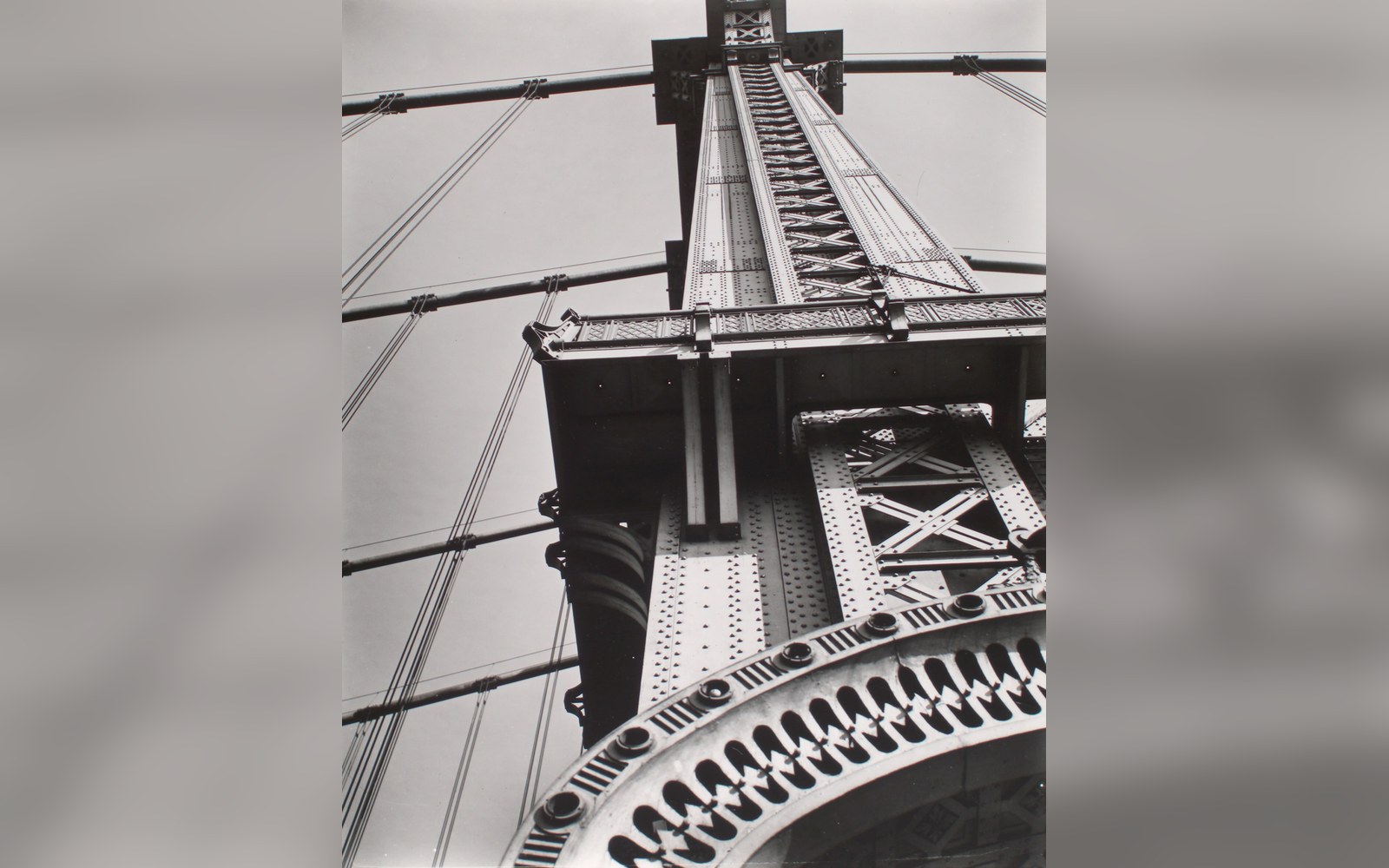
The stays radiate from the tower because roughly a quarter of the cable wire could not be trusted.Manhattan Bridge, from Bowery and Canal Street (NYPL b13668355) · Wikimedia Commons
The Brooklyn Bridge opened in 1883 on a gamble: that steel wire, spun in place above the East River, would hold longer and stronger than the wrought iron every other suspension bridge had trusted. It would. But the wire that went in wasn't always the wire that was specified.
The decision that changed the cable
John A. Roebling had already built suspension bridges — the Niagara Falls Railway Bridge, the Cincinnati-Covington Bridge — and he understood their arithmetic better than anyone alive. When he turned to the East River crossing, the span was longer than anything attempted: 1,595 feet of clear water between the two towers, with a roadway wide enough for railway cars, carriages, cable cars and a pedestrian promenade all running simultaneously. Wrought iron wire, the conventional material, would have worked in theory. Roebling chose steel anyway.
The difference was not trivial. Steel wire of the grade Roebling specified carried a tensile strength roughly double that of comparable iron wire, which meant each cable could be slimmer, lighter and yet stronger than an iron equivalent would have been. It also meant the bridge could be designed with a safety factor — a ratio of the wire's breaking load to the actual load it would carry — that was, by Roebling's own calculations, around six to one. That margin would matter.
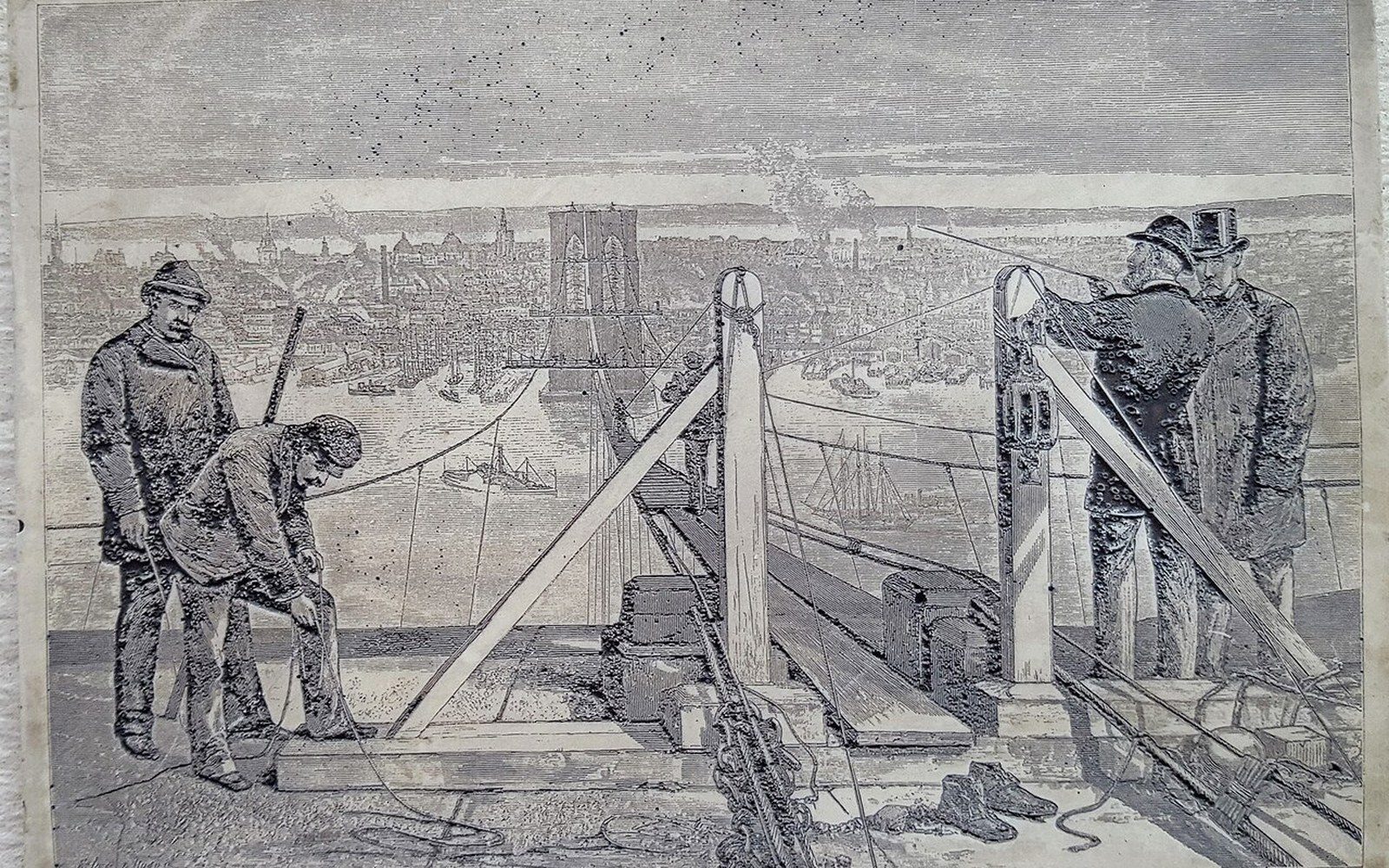
Sighting tower to tower in 1877, from the temporary footbridge, before a single cable wire was spun.View from Tower to Tower, 1877 · Wikimedia Commons
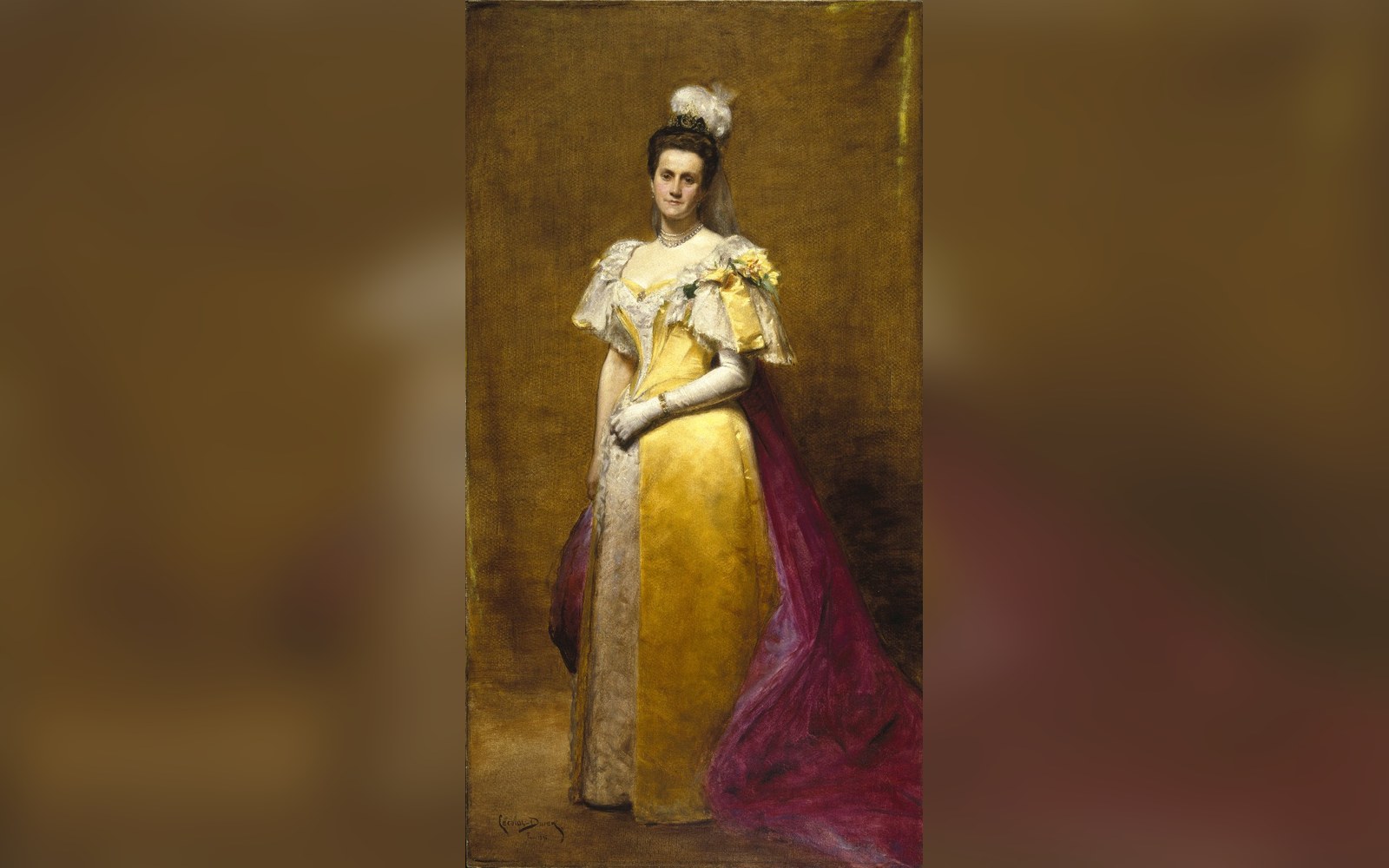
Roebling did not live to see wire spun. He died in July 1869, three weeks after a surveying accident on the Fulton Ferry dock crushed his foot, and the infection that followed was tetanus. His son Washington Roebling took over, sank the pneumatic caissons that form the bridge's foundations, and suffered severe decompression sickness — caisson disease — that left him partially paralysed by 1872. For eleven years after that, Emily Warren Roebling carried the project: she learned the mathematics and engineering herself, became the daily conduit between Washington's sickroom on Columbia Heights and the site below, and rode across the finished bridge in the opening procession on May 24, 1883.
The cable and the fraud
Each of the bridge's four main cables is just under sixteen inches in diameter and contains 5,434 individual wires, arranged in nineteen strands of 286 wires each. Those figures are not incidental: they are the result of a specific spinning method developed by John Roebling's wire-rope firm in Trenton, New Jersey. The wire was not pre-made into rope and hoisted; it was spun in place, carried back and forth across the river on a travelling wheel, loop by loop, until each strand reached its count. The method allowed for precise tension adjustment at every stage, and it is why the cables still function today.
What disrupted that precision was a contractor named J. Lloyd Haigh, who held the wire supply contract and who systematically substituted wire below the specified tensile strength ↗ for the steel that had passed inspection. Haigh's scheme was elaborate: bundles of approved wire were marked and then swapped for inferior stock before they reached the spinning wheel. Washington Roebling's inspectors eventually caught the fraud mid-construction — estimates suggest roughly a quarter of the total wire in the cables may be substandard — but by then, replacing what had already been spun was impractical.
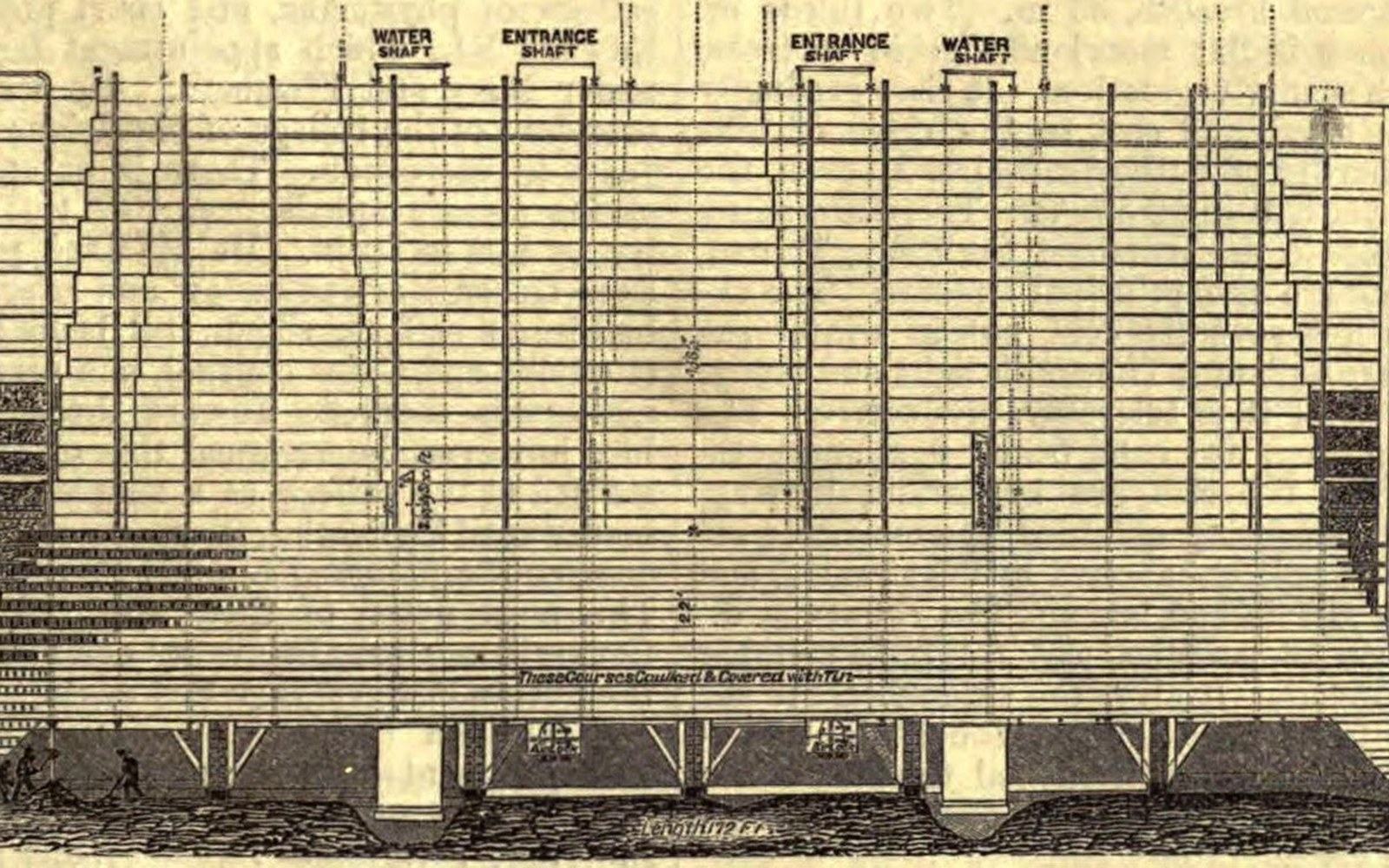
The caisson in section: entrance and water shafts above, the excavation face under the riverbed.AmCyc Caisson — caisson of the East River Bridge · Wikimedia Commons
The response was engineering, not concealment. Roebling added 150 extra wire ropes as supplementary stays, wrapping the deck structure and running diagonally from cable to tower and from cable to deck. These are the radiating lines visible in almost every photograph of the bridge — what look like a spider's web drawn against the sky — and they are there specifically because the wire beneath them could not be fully trusted. The safety factor Roebling had originally calculated absorbed the deficit; the bridge opened, and held.
Key engineering numbers
1,595 ftmain span between towers, the longest suspension span in the world at its 1883 opening
5,434individual wires per main cable, arranged in 19 strands of 286
~15¾ indiameter of each main cable
276 fttower height above the waterline
135 ftclearance height of the roadway above the river
44 ft (Brooklyn) / 78 ft (Manhattan)caisson depths to bedrock
150supplementary wire-rope stays added after Haigh's fraud was discovered
~¼estimated fraction of cable wire that may be substandard Haigh stock
Chronology
1869John A. Roebling dies; Washington Roebling takes over
1872Washington Roebling incapacitated by caisson disease; Emily Warren Roebling assumes day-to-day engineering role
Mid-constructionHaigh fraud discovered; extra stays added
May 24, 1883bridge opens
1903Williamsburg Bridge completed using the same aerial spinning method
The Brooklyn Bridge's cables did not age out of relevance; they demonstrated something. The same Roebling firm that supplied the East River's wire went on to furnish cable for the Williamsburg Bridge, completed in 1903, and later for the George Washington Bridge and the Golden Gate. Steel wire spinning as a construction method — aerial spinning ↗, the specific technique refined at the East River — became the standard approach for long-span suspension bridges worldwide. Every major crossing of the twentieth century owes something to the method worked out in the air above what is now DUMBO.
The bridge itself accrued layers over time. The original wooden roadway planking was replaced; the cable anchorages, sunk deep into the Brooklyn and Manhattan shores, were reinforced; the railways that originally ran along the deck were removed when car traffic made them redundant. But the cables have not been replaced. They have been inspected — most recently in a thorough condition survey completed in 2020 by the New York City Department of Transportation — and found to retain substantial capacity. More than 140 years in, steel held where iron might not have.
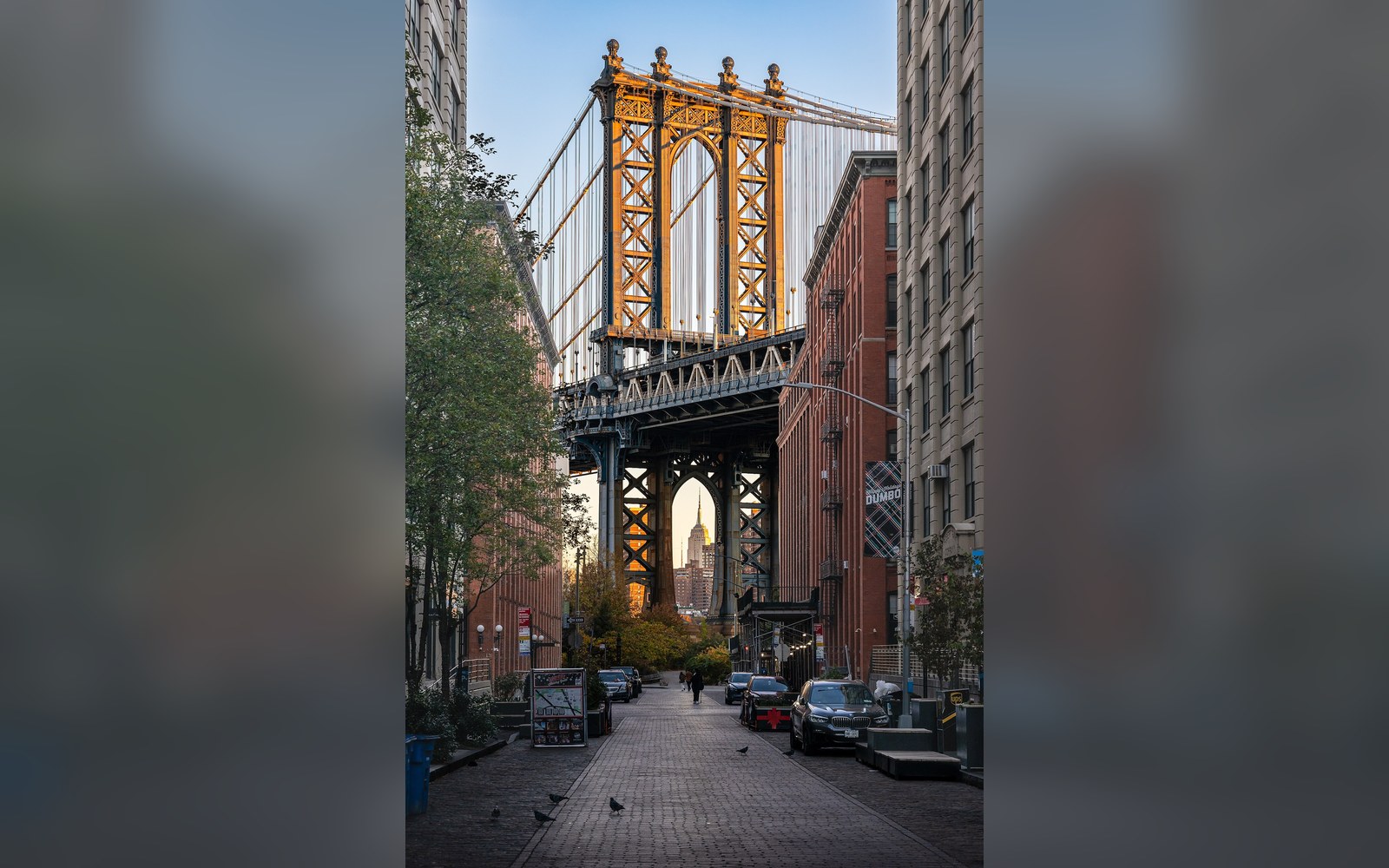
Water Street keeps its cobbles because the neighbourhood was too empty to be resurfaced.Manhattan Bridge from DUMBO, 2024 · Wikimedia Commons
Standing on it
You can walk the bridge on the elevated promenade that runs its full length, a feature Roebling designed into the original plan. From up there, the cables resolve into something more comprehensible than they appear in photographs: you can see how the main cables drape in catenary curves between the towers and down to the anchorages, and how the suspender wires hang vertically from them to carry the deck. The diagonal stays — Haigh's legacy, essentially — radiate from the towers in a pattern that is simultaneously structural and, as it turned out, the image everyone reaches for when they mean New York.
The towers themselves are Gothic limestone arches, sunk on foundations that required workers to descend into pressurised wooden caissons on the riverbed and excavate by hand. The Brooklyn caisson hit bedrock at about 44 feet below the waterline; the Manhattan caisson had to go to 78 feet, which is why more men on the Manhattan side developed the bends. The towers rise 276 feet above the water, and the roadway deck clears the river at 135 feet at its highest point — enough headroom for the tall-masted ships of 1883 that no longer arrive.
Emily Warren Roebling, who managed the site for the eleven years the cables went up.Portrait of Emily Warren Roebling, Carolus-Duran · Brooklyn Museum, via Wikimedia Commons
What Roebling's choice of steel did, in the end, was buy time that iron could not have guaranteed. A wrought-iron cable stretching more than 3,000 feet between anchorages, carrying its load through a century and a half of thermal expansion, traffic growth and salt air, would have required replacement decades ago. The steel cables at the East River still carry the load. The adulterated wire, covered by extra strands and held within a safety factor that was large enough to absorb the cheat, sits silent inside a wrapping of galvanised steel that has turned the colour of old pewter. You are walking above all of it when you cross.