The name was invented to scare developers off. It didn't work.
How an acronym became a neighbourhood
By the late 1970s, the blocks wedged between the Manhattan and Brooklyn Bridges were functionally abandoned. The nineteenth-century brick warehouses along the waterfront had housed coffee importers, spice traders and printers; when containerisation moved freight to New Jersey and the old industrial economy dissolved, the buildings simply emptied. Rents dropped to almost nothing, and artists found them.
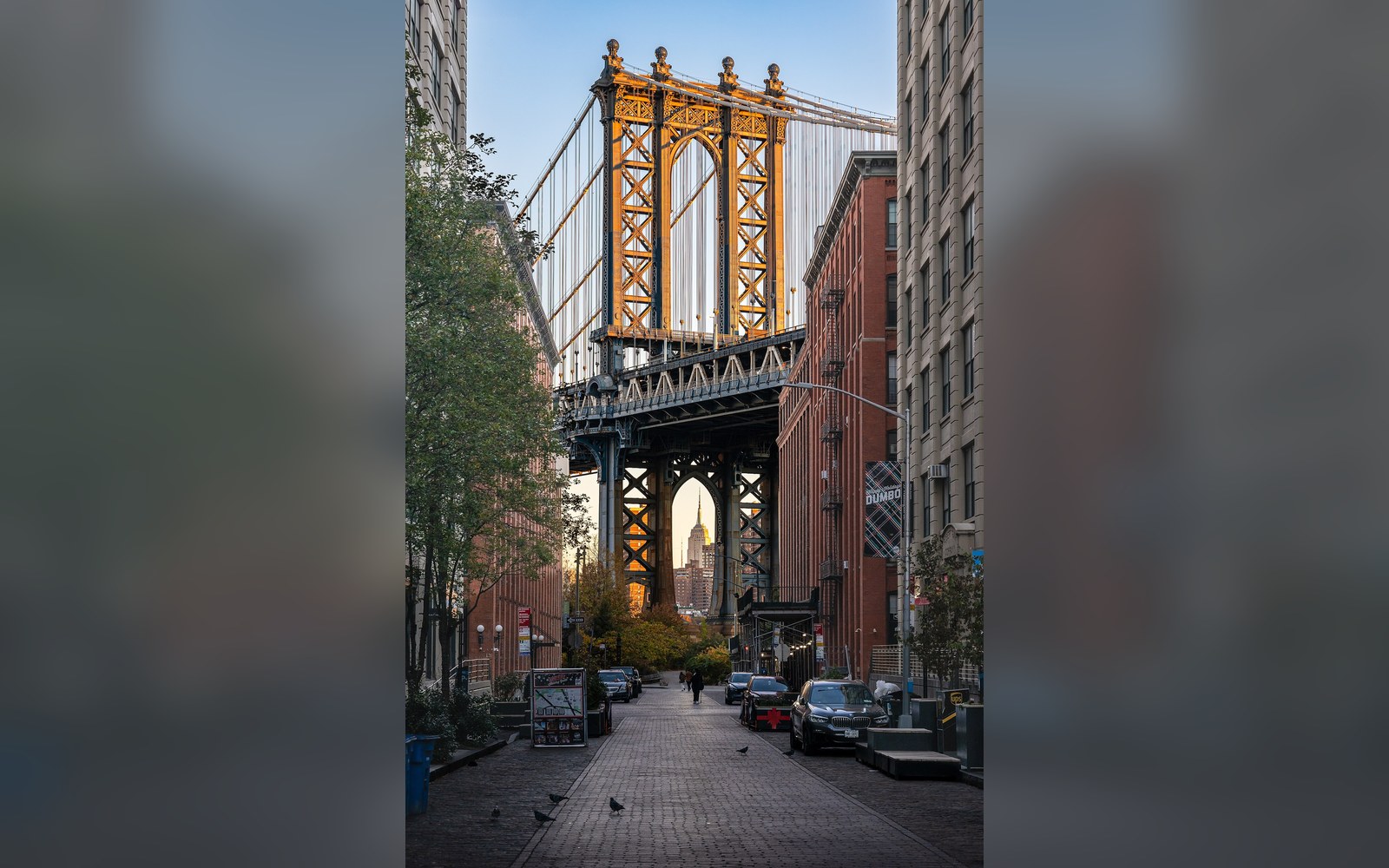
The residents who arrived first understood that visibility was a threat. They coined DUMBO — Down Under the Manhattan Bridge Overpass — deliberately: an acronym ugly enough, they hoped, to keep developers from bothering. The logic was sound. The execution didn't hold.
What the warehouses gave artists was space of a kind that barely existed elsewhere: raw timber floors, iron columns, ceilings high enough to suspend large work, and loading bays that could swallow canvases. These were lofts ↗ in the original sense — the upper storage floors of industrial buildings, repurposed without much renovation. Heat came from the pipes if you were lucky. Light came from windows sized for freight, not people.
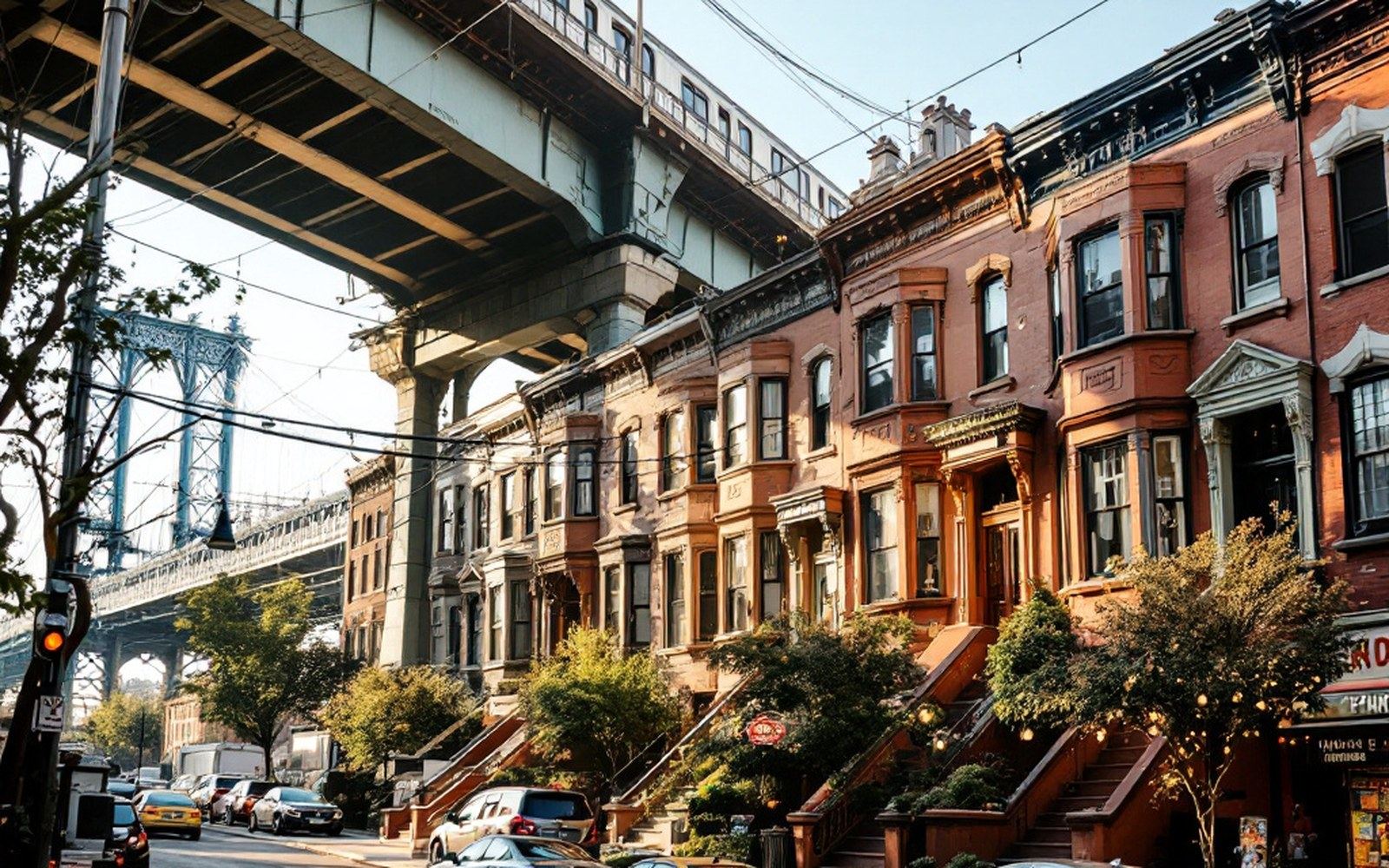
The two bridges frame the neighbourhood completely. The Manhattan Bridge lands at the foot of Flatbush Avenue Extension; the Brooklyn Bridge ↗, completed in 1883, anchors the western edge. Between them, the grid is interrupted by the elevated tracks of the B and D lines, which run overhead through the blocks and fill the streets with periodic noise. The cobblestones on Water Street are not decorative — they predate asphalt and survived because the neighbourhood was too empty to bother resurfacing.